Kythera… my island home

Fried sardines at Diakofti

Santorini, Mykonos, Crete, Paros.

Bet you’ve been there, strolled past the white-washed houses, tasted the moussaka and drunk the ouzo.

Yamas!

These are all gorgeous, albeit very-touristy islands. And rightly so. They ooze the essence of Greek island life with their bougainvillea-lined cobblestone laneways and evocative taverna lifestyle. Who doesn’t dream of living a Greek island lifestyle?

Except that the Greek island lifestyle wasn’t always so picturesque.

If it was, my papouthes and yiayathes would not have fled in the 1930s and 1940s respectively to start new lives in Australia.

Their Greek island was especially exposed. Its strategic location in the Ionian Sea had made it a red hot target through history and any conqueror worth their sea salt made their way there; Venetians, Turks, French, English, Nazis…… when my Thea Marika once pointed to the second-story of the family home dating to the 1500s and told me they used to hurl hot oil through the window to scare the pirates below – she wasn’t kidding.

That island is Kythera.

Where you ask?

Exactly.
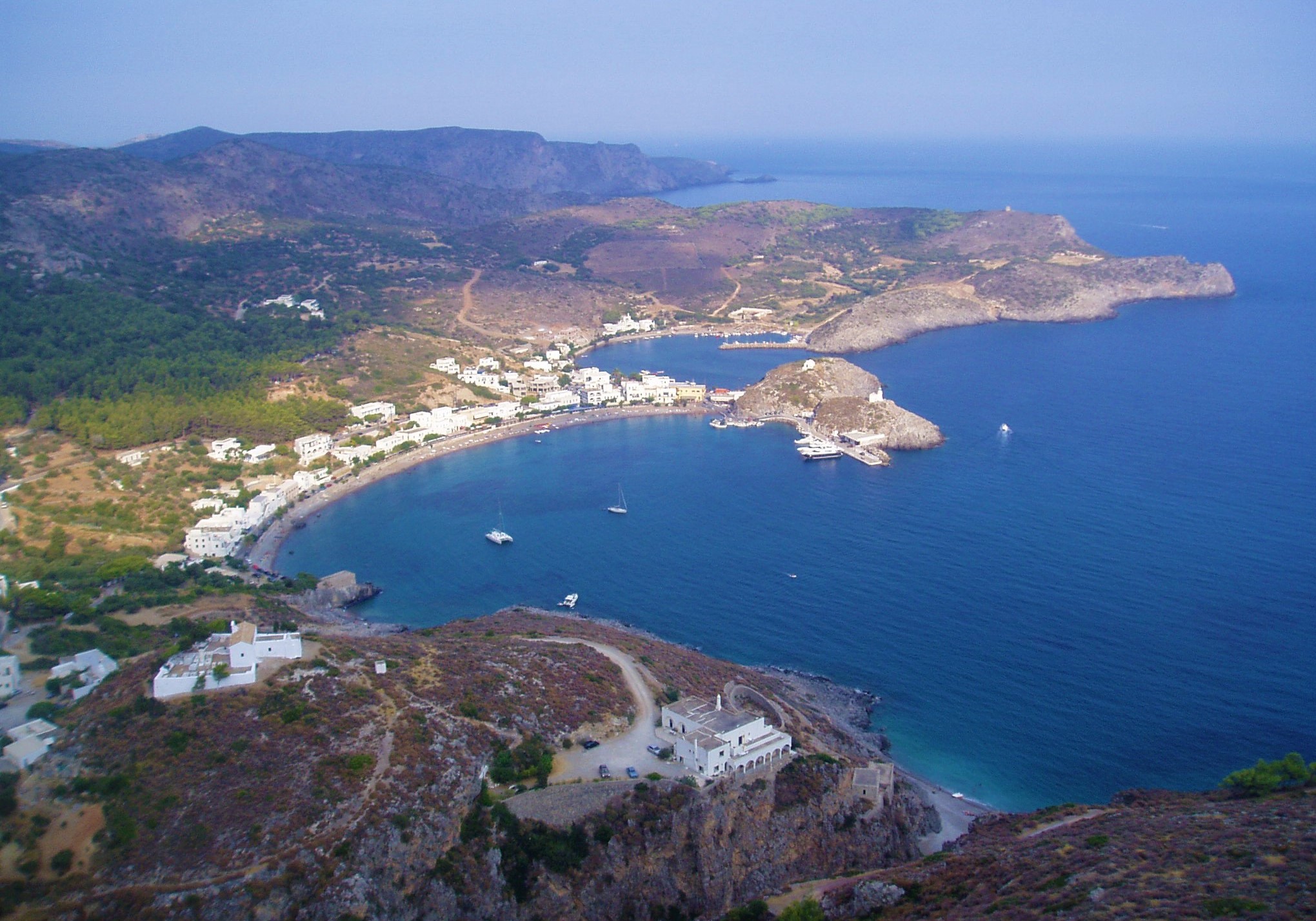
The iconic twin bays of Kapsali

With the pirates now less of an issue, Kythera is the under-the-radar Greek island that you’ve never heard about and with any luck it will stay that way. Its strategic location, marooned between the Peloponnese and Crete, was a drawcard for those pirates but doesn’t suit modern-day travellers. You can’t ferry hop easily the way you can between the Cycladic islands. There’s only one flight a day in summer in a plane that fits 20 people. Traverse the island’s perilous roads in a bus at your peril. Mass tourism is literally not possible.

Which means that the only non-locals you encounter when you visit are the other Kytherian-Aussies who visit in droves in the summer months. Locating my extended family is as easy as strolling along Kapsali beach on my way to have a frappe.

It feels indulgent to have 100% lineage from one single island. To have visited the houses where my grandparents grew up and walked through villages bearing their name, e.g. Kastrissianika which is named after my Papou Con’s family. (Side note: where is the village of Megaloconomosanika?).

Being in Kythera reawakens part of my culinary soul. Of course I was eating the delicious food that originated from Kythera from the moment I started on solids. And many traditions followed my family across the sea to their new homes in Australia. But being in my homeland connects me to those traditions like configuring pieces of a puzzle.

Dad points out Papou’s hut through the horafia

Olives – the bedrock of Greek culture – are a good place to start. The foliage makes up crowns, the fruit is delicious to eat and the oil is essential in rituals (and deters those pesky pirates). I’ve always maintained that the secret to Greek cooking is 50% love and 50% olive oil. But that never feels as prescient as it does when I am standing in the olive groves that have been part of my family’s subsistence for over 100 years. While one olive tree looks the same as the next (at least to me), what sets this grove apart is the hut at the back that my Papou Peter built when he was a teenager so he would have somewhere to sleep when spending long days tending to the trees.    
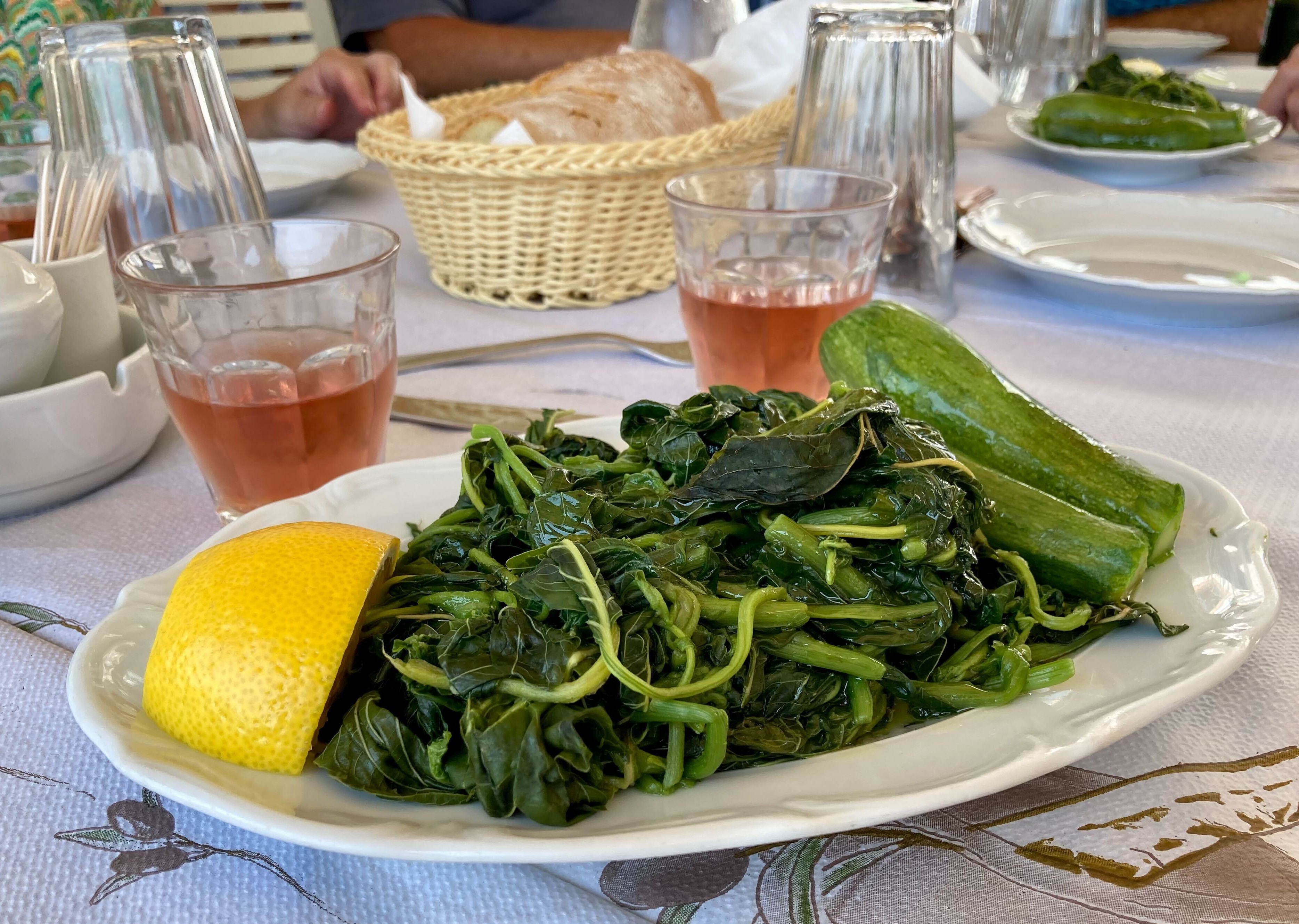
A plate of the good stuff… horta

The other main source of subsistence was horta, or wild greens, which I have written about before in an effort to explain why Greeks love weeds. Not a single meal on my recent trip passed without a bowl of vlita on the table with lemon and olive oil.

Give me horta and horiatiki (Greek salad) and I’m happy” declared mum.

Fresh vlita at the markets

It’s hard to find the exact same greens in Australia. There were murmurs of smuggling in seeds from Kythera so we could recreate the exact breeds here. I’m fairly sure the older generations did exactly that.

While vlita is in season during summer it switches to rathikia a few months later. Eating in season is the only way Greeks eat and it’s a revelation. You want figs in July? Go home and come back in August because that’s when they’re in season and that’s when you’ll get them. Not a moment before or after.  

Kolokythi with horta and octopus

That’s the reason why kolokythi, zucchini, was in every second dish while we were in Kythera. It was in season, it tasted great, so the entire island got involved. The idea of bringing in produce from elsewhere so it’s always available is never a consideration. We ended one meal with fresh karpouzi or watermelon. Our host noted that watermelon wasn’t grown on the island and it had come from the Peloponnese, in a tone of regret that implied the Peloponnese was a far-flung foreign country versus being the Greek mainland.

That was a particularly memorable lunch. It started at 3.30pm, which seems ridiculous until you consider that dinner is usually eaten around 10pm.  Once you acclimatise to Greek time you never look back.
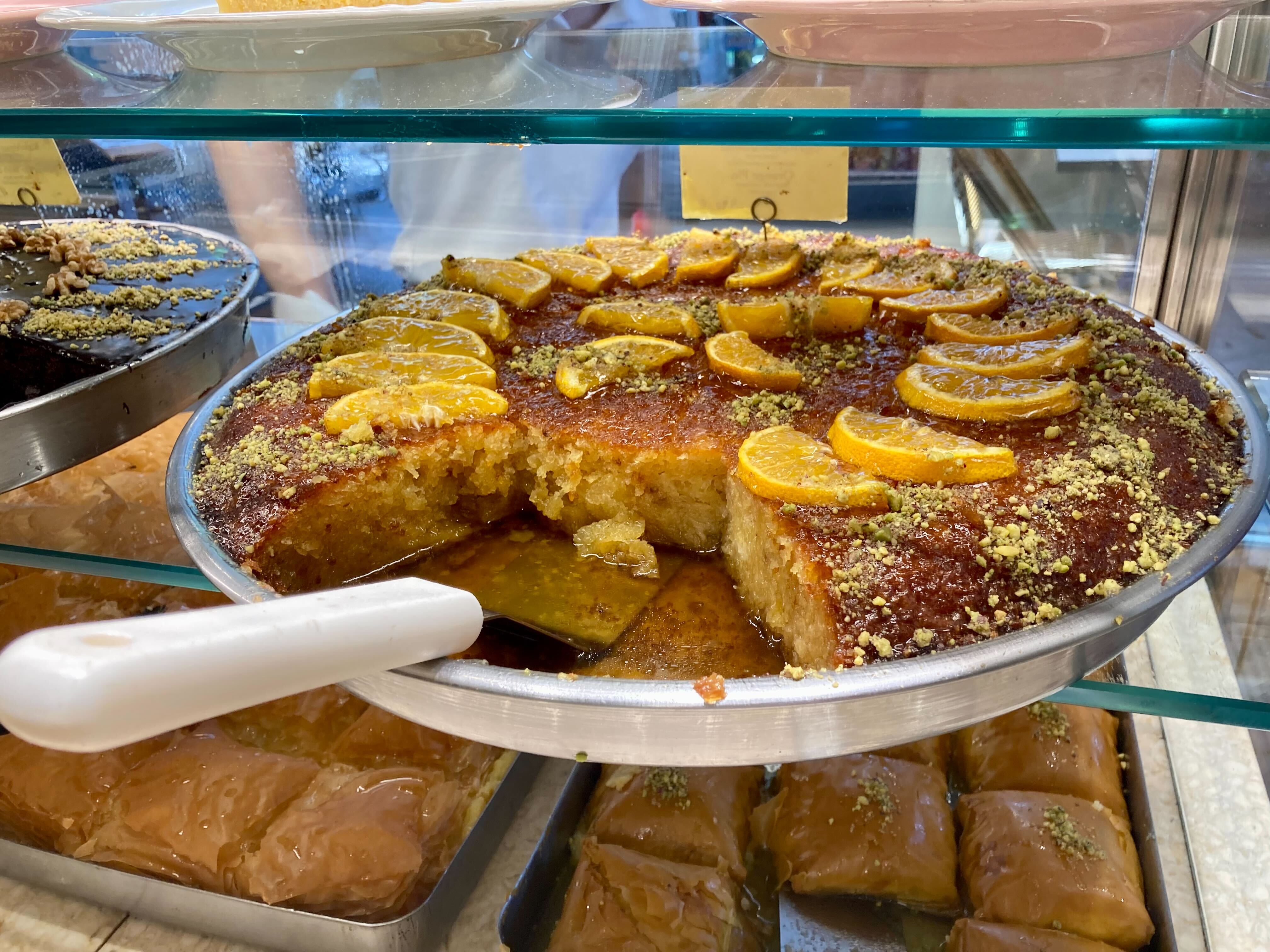
Portokalopita

The cocky foodie in me thought I had Greek sweets down pat. I’ve been known to eat galaktoboureko for breakfast and will move heaven and earth to track down the best bougatsa in town. I didn’t expect to unearth a new (for me) sweet and was delighted when I did. It was mum who put portokalopita on my radar and we ate our way through copious amounts while on the island. It’s made from phyllo drenched in orange syrup and I am now officially obsessed. No Greek cake shop in Sydney seems to make it (why, why?!!) so I will have to turn my hand to it instead.
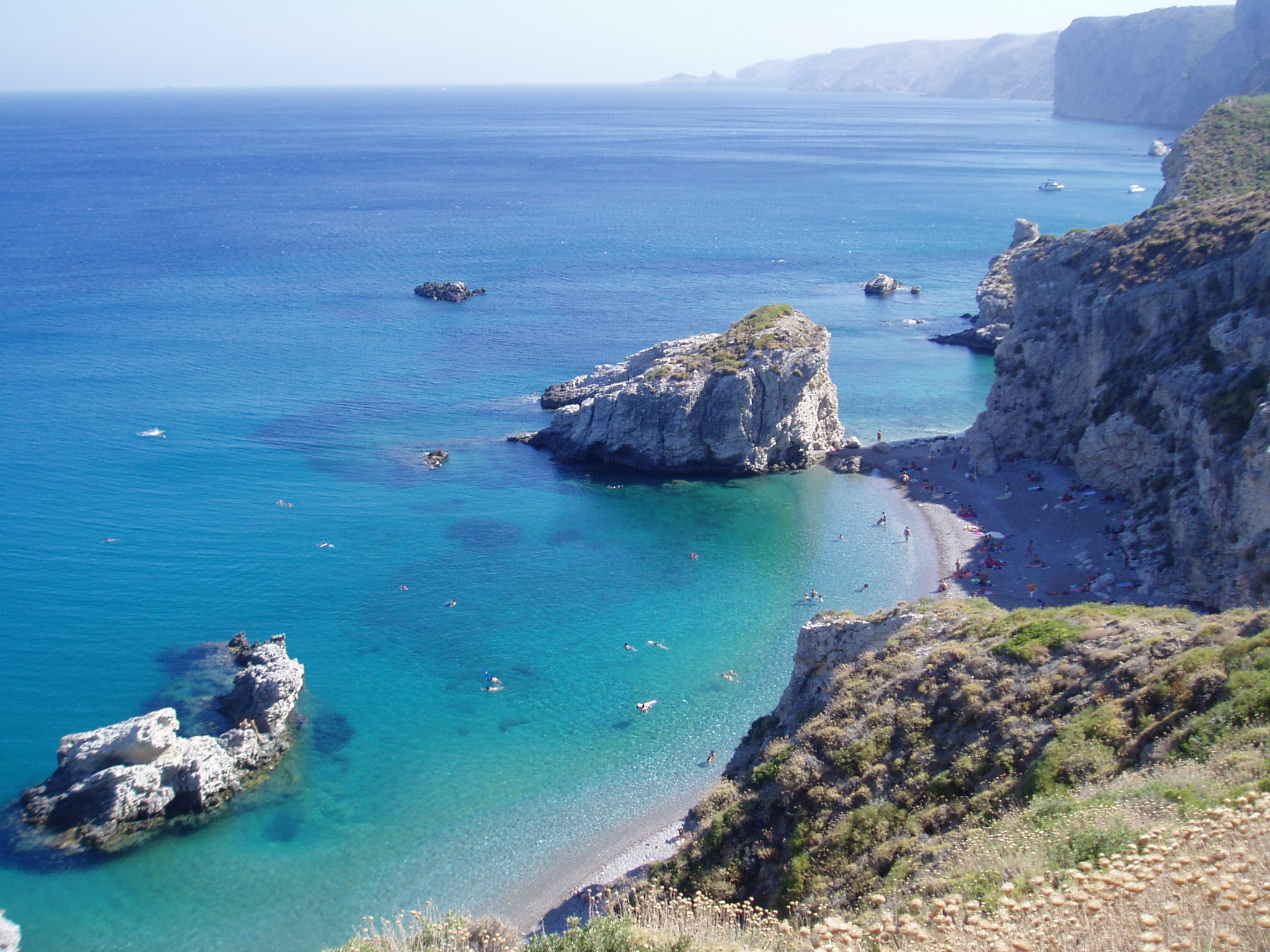
The stunning beach at Kaladi

It would be remiss of me to talk about Kythera without talking about the sea. The waters around the island are special, but don’t take my word for it. The ancient poet Hesiod recounts in his epic Theogony that Aphrodite, the goddess of love and beauty, was born in the foam of the sea of Kythera. As far as I’m concerned we’re distant cousins and I’ve forgiven her for defecting to Cyprus.
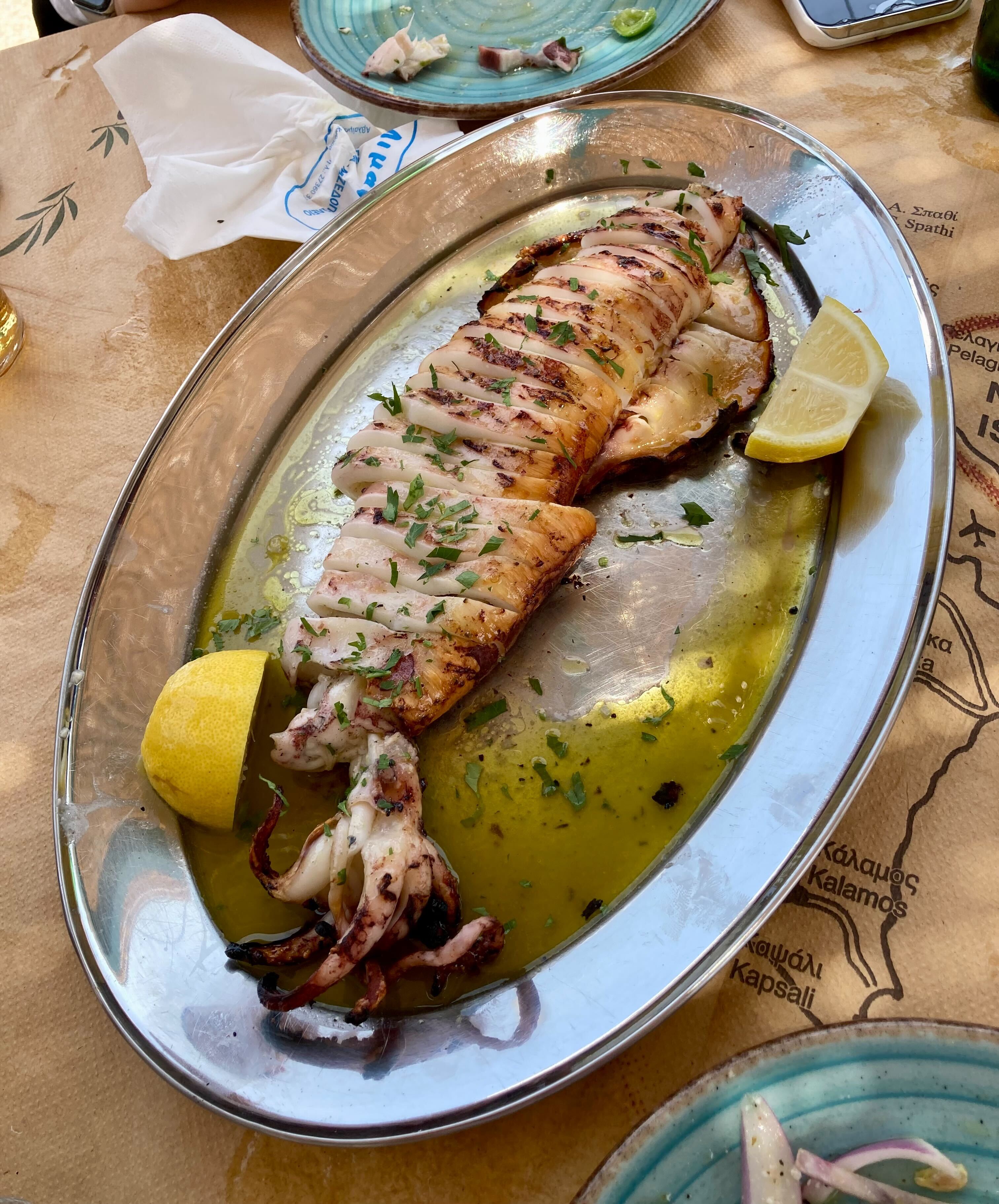
Freshly grilled calamari

The influence of the sea is strong in my family. Both of my papous were in the Greek navy. By the time they came to Australia their maritime roots ran deep and profoundly influenced their lives. My Papou Peter was a deep-sea fisherman and also the seafood chef at the Royal Automobile Club. My dad was the lucky kid at school with lobster sandwiches in his lunchbox.

My Papou Con ran the most buzzing fish shop in Sydney in the 1950s and 1960s – Wynyard Fish Supplies – with his brothers. It was the go-to place for city workers to pick up their seafood essentials, especially on a Friday.
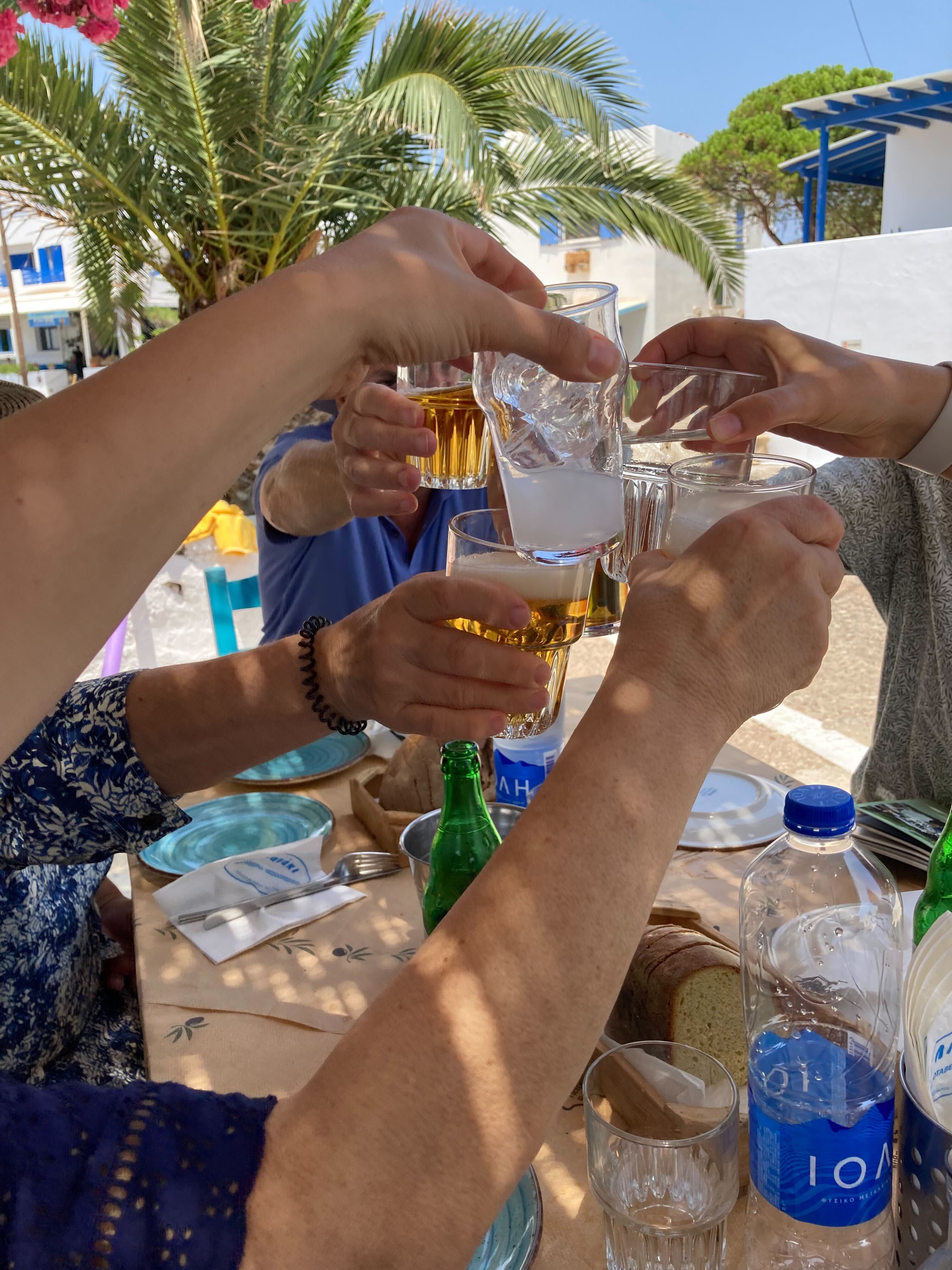
Special family moments over lunch

Greek food is never just about the food. It’s the vessel that brings loved ones together to share, laugh and live life. Holidays in Kythera revolve around your morning frappe, which taverna to meet at for lunch (Pierros in Livadi or Lemonokipos in Karavas?), and where to reconvene in the evening. On Sundays, the bulk of the 4,000 strong island gravitates to Potamos for the Sunday market and the chance to reunite with friends, complain over coffee and peruse the local gliko (spoon sweets) or ladi (oil). If the entire island didn’t already know you were in Kythera, they do now.

Beguiling Avlemonas

The beauty of Kythera is not just Aphrodite’s legacy. It’s not only the sand, sea and sweet smell of golden grass and olive wood (so intoxicating that French luxury brand Hermès has bottled it into a fragrance – Un Jardin a Cythere). Kythera is the origin story for this fidgety foodie and a place that will always feel like home.  
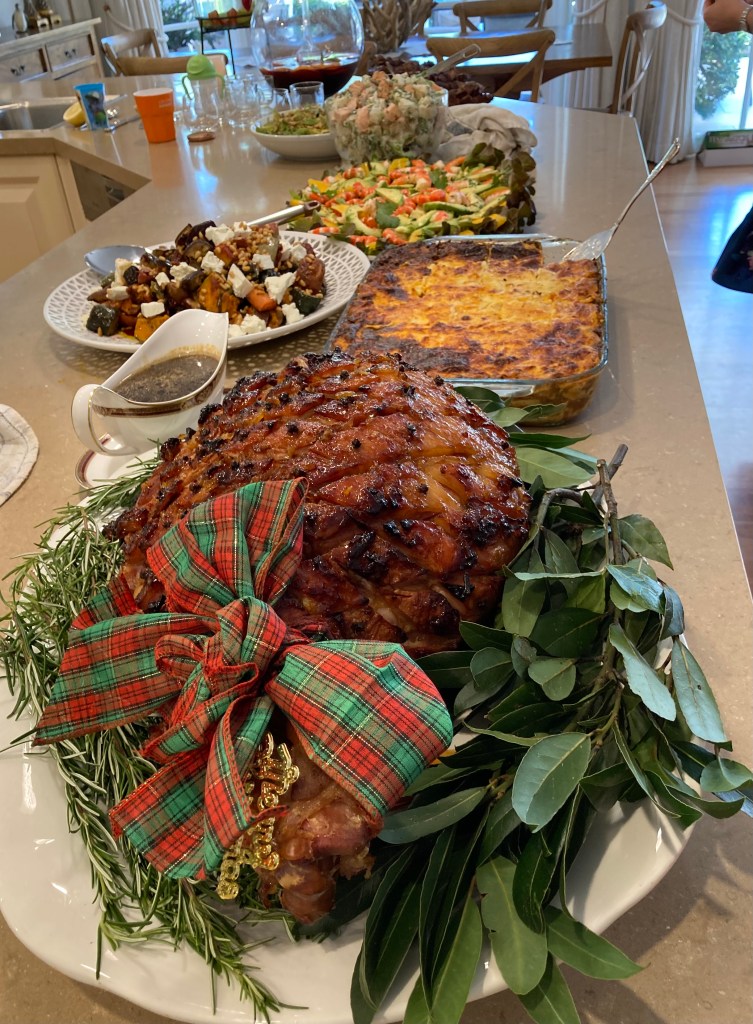
The 4 food groups of Christmas

This image has an empty alt attribute; its file name is the-4-food-groups-of-christmas_the-fidgety-foodie-7.jpg

I am nostalgic at the best of times but at Christmas I am in overdrive.

For example, I am emotionally attached to every decoration I’ve grown up with so when one disappears from my parents’ tree I am immediately concerned. Last week I noticed that a (technically edible) decoration I made in primary school (a real orange spiked with cloves and dried) was gone.

“It rotted last year. I tossed it” said mum matter-of-factly without a shred of regret.

“Whaaaaaaaaaaaaaaaaaaaaaaaaaat????????????” I wailed with my arms in the air (an appropriate reaction given the severity of the disaster and on par with mum’s reaction when she thought we’d lost her beloved Rod Stewart Christmas CD).

I was devastated. I made that decoration with my own two infant-sized hands, it was priceless! Rotting was no excuse for disposing of it, no matter how decomposed it was.

If I’m like that about decorations, imagine what I’m like about the food????

I am extremely attached to our Christmas eating traditions. We have developed a very specific style over the years, a mélange of Greek, English, Aussie traditions with a few other random European touches. It’s unique and reflective of the extraordinary cooking talent that exists in my clan. Spearheaded by my dear yiayias – Alexandra and Maria – and deftly continued by my mum, aunties and sisters.  

A highlights reel of Christmas day feasting over the past 25 years (spot the retro photography!)

In my typical nostalgic state over Christmas, I got to thinking about our foodie traditions and how special they are to me. So… what exactly is on our Christmas lunch* table?

(*I call it lunch but we’ve never eaten before 4pm.)

I’ve whittled down the magic into 4 key food groups. There are others of course – there’s always a healthy smattering of mezedes, salads, roast vegetables and carbs. But they ebb and flow with the seasons and the styles. Mum’s dining table wouldn’t have been caught dead without her signature potato casserole nestled beside her artichoke and avocado salad in the 90s. So chic. These days the salads are more artisan and the roast veg extend beyond the humble spud.

So here are the 4 key food groups of my family’s Christmas.

Prawns

Our family Christmas lunch always starts with prawns. I should know – I’m usually the poor sucker who has to peel and devein them. A facebook memory reminded me that 5 years ago I peeled 125. That was good context for this year as I peeled 65 and that felt like torture. I moan but it’s worth it – who wants to have to do all that work on their own plate? Apart from the effort, which is better channeled into pulling crackers, the prawn debris takes up valuable real estate for other delicious things. I happily take one for the team most years. And they are delicious whatever way you cut it – naked with lemon or in a salad with avocado and mango like this year.

Lasagne

Okay I know what you’re thinking. Lasagne is Italian. You’re Greek.

True.

(Although we are technically Italian too as my island was a hotbed for Venetians who used to sail past and get frisky with the girls. You only need to go about four generations back to see how our family name was Venetian. DNA tests show the same thing.)

But back to the food.

There are Greek variations of lasagne. Pastitsio – which uses penne instead of thin pasta sheets. There’s also the powerhouse of moussaka which switches pasta for eggplant and potato.

Why don’t we stay in our lanes here? Good question.

Yiayia Maria started it. Mum tells me that she remembers yiayia making pastitsio when she was young but at some point yiayia switched to lasagne and never looked back. Christmas isn’t Christmas without yiayia’s lasagne. It’s unbelievably delicious. She once showed me how to make it and technically there’s nothing flash about it and no secret ingredients but mine doesn’t even come close. Mum’s does though. The baton has been passed.

Big meat

For many years I thought everyone had a giant turkey, ginormous leg of ham and huge pork roast for Christmas lunch.

Nope. Just my family.

The turkey and ham are pretty self-explanatory, they are long-standing English and European traditions that have been appropriated by much of the world. The addition of pork is a nod to our heritage and the main ingredient of a traditional Greek Christmas feast because pigs were typically slaughtered in the weeks leading up to Christmas day.

The roast pork has faded out over the last few years. And we have all come around to the cold hard fact that a roast turkey is stressful, time consuming and never as tasty as the dream (making another one of yiayia’s lasagnes would have a better return on investment).

So instead we’ve gravitated to turkey rolls and even a turducken for kicks.

Does that mean less meat overall on the table? Hardly. We still had 60 souvlakia on the table this year, you know, in case anyone was still hungry.

Sweets

This is where our Christmas really shines. The meat, salads, carbs, etc are just a warm up for the main event – the sweet table! No matter how full you are, space can always be found for sweets.

I’ve never seen a Greek sweet table with less than a dozen (big) dishes on it. I remember once my mum was entertaining and accidentally forgot to serve a huge cake that was waiting patiently in a cupboard. No one even noticed its absence because there were at least 10 other mammoth desserts on offer.

This is where we weave back in Greek traditions.

Mum prepares this year’s batch of kourabiethes

Starting with kourabiethes  – those delicious toasted almond spiked crescent-shaped shortbreads that are groaning under the weight of icing sugar. Never sneeze while holding one or you’ll turn into a snowman. Apart from the toasted almonds, the other differentiating feature is the addition of ouzo.

There’s also melomakarona, a traditional orange and cinnamon scented biscuit doused in honey and crushed walnuts. And rozethes, a typical honey almost biscuit from my island of Kythera.

Purple-powered trifle

This is on top of an array of other sweet treats – tiramisu, trifle, mousse cake, white Christmas, fruit cake, pavlova and mum’s signature ice-cream cake made with glace fruit and Vienna almonds.

An obligatory fruit platter rounds out the offering and our bellies.

And because we’ve catered for a small army there are leftovers for days.

It really is the most wonderful time of the year.

Macey gets into the festive spirit

How the Greeks influenced Aussie eating

how-the-greeks-influenced-aussie-eating_the-fidgety-foodie-1

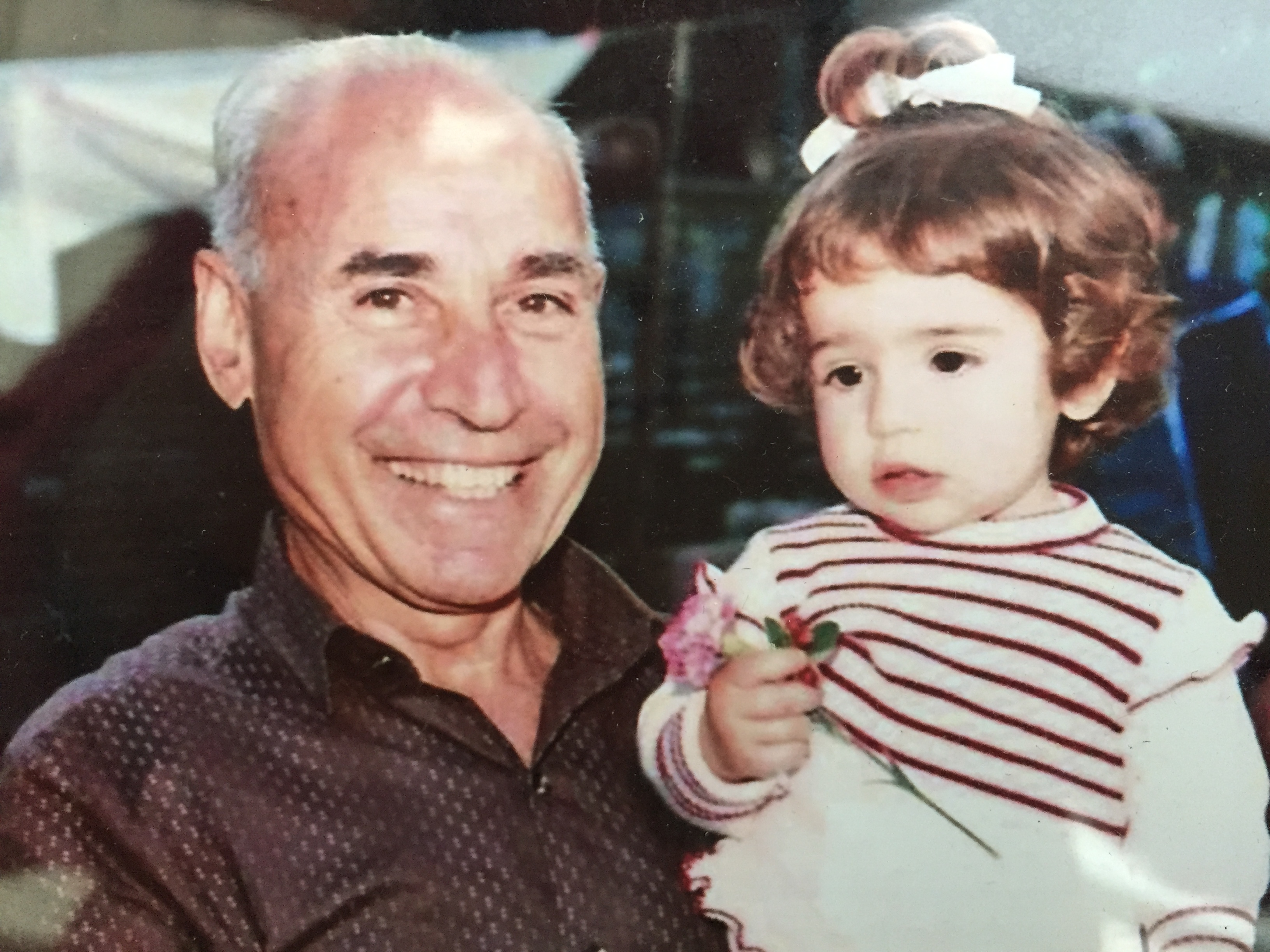
Me with my Papou Peter – I inherited both his love of food and his nose

I really wish I had known my grandfathers.

They both died when I was a toddler so all I have are some old 80s-style photos of them holding me proudly in their arms.

Despite not knowing them I am pretty sure my love of food stems from their influence: one was a seafood chef at The Royal Automobile Club, amongst other places, and the other ran a fresh fish shop in Sydney’s Wynyard Station which was the place to buy fish in the 60s. It’s now a McDonald’s.

These weren’t uncommon career paths for Greek immigrants, who came to Australia with nothing but the determination to succeed and a little ingenuity. Food was a way for new migrants to assimilate into the community and find jobs, even when they didn’t speak English. Many also came via America or had family in America where they’d picked up culinary ideas that were ripe for applying to the Aussie market.

book-greekcafes-milkbars-australia-1-600x630

The fantastic book by Effy Alexakis and Leonard Janiszewski

My ears pricked up when I heard about a new book by historian Leonard Janiszewski and photographer Effy Alexakis that delves into the impact that Greeks have had on the café culture in Australia. The book compiles the stories of many Greek families and looks at the development of eating culture through the lens of the Greek café and milk bar. The book proves that Greeks truly changed the face of public eating in Australia.

As part of History Week (can you tell I’m the daughter of a history teacher?) I went along to a book talk with my Aunty Kathy and was fascinated to learn more about other Greek families in hospitality and their impact on Aussie culture.

how-the-greeks-influenced-aussie-eating_the-fidgety-foodie-6

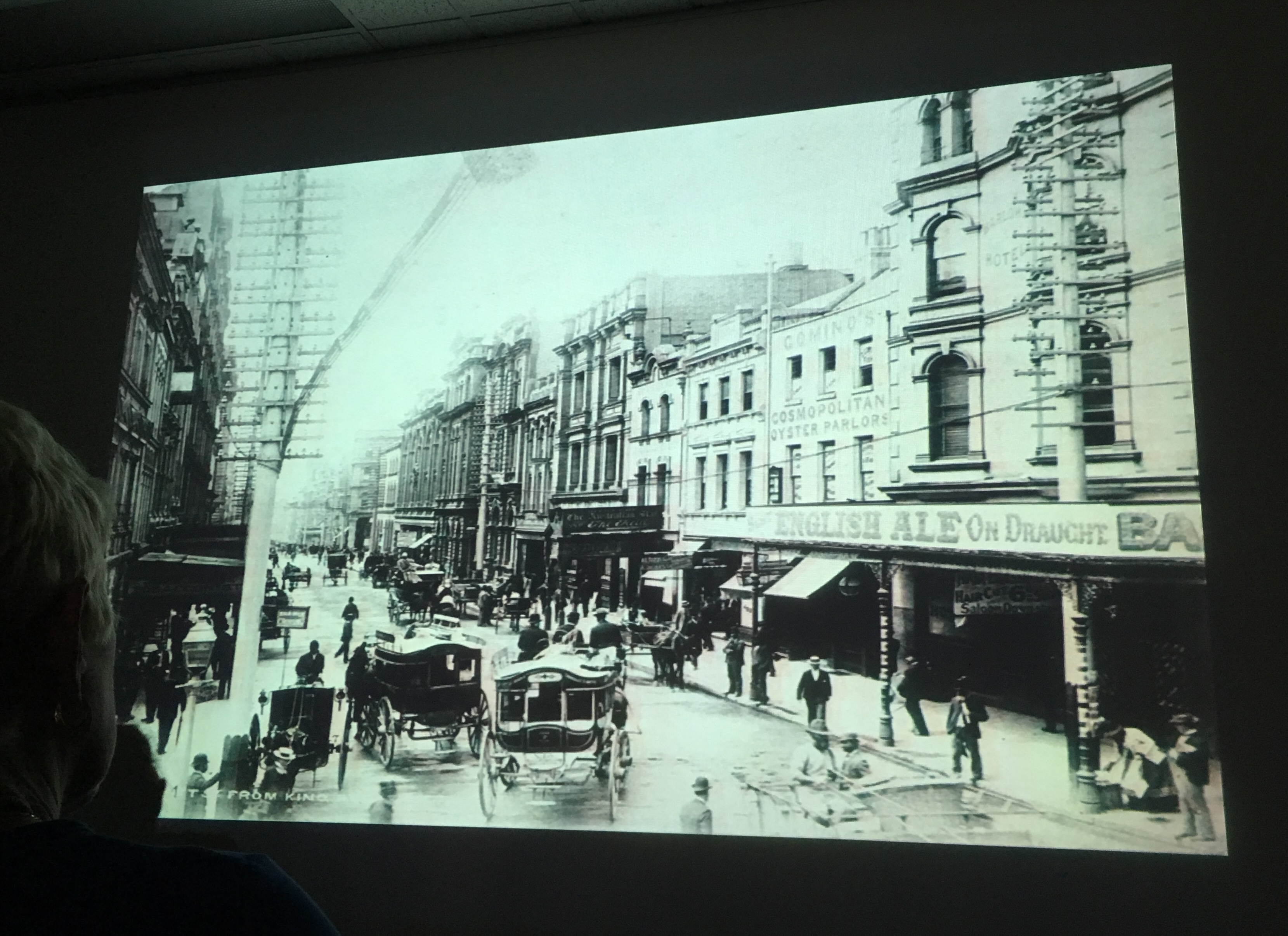
Pitt St Sydney circa 1900 including iconic Comino’s Cosmopolitan Oyster Parlor – photo from Greek Cafés & Milk Bars of Australia

It’s hard to imagine how different things once were. In the late 1800s and early 1900s, Australia mimicked the UK and social hierarchy was everything. The rich ate here and the poor ate there. But in Greece, people have always mixed and mingled and eating is about family, delicious food and a sense of community. When the Greeks came to Australia to find a better life, they eschewed the social stratification of the day and opened establishments for everyone.

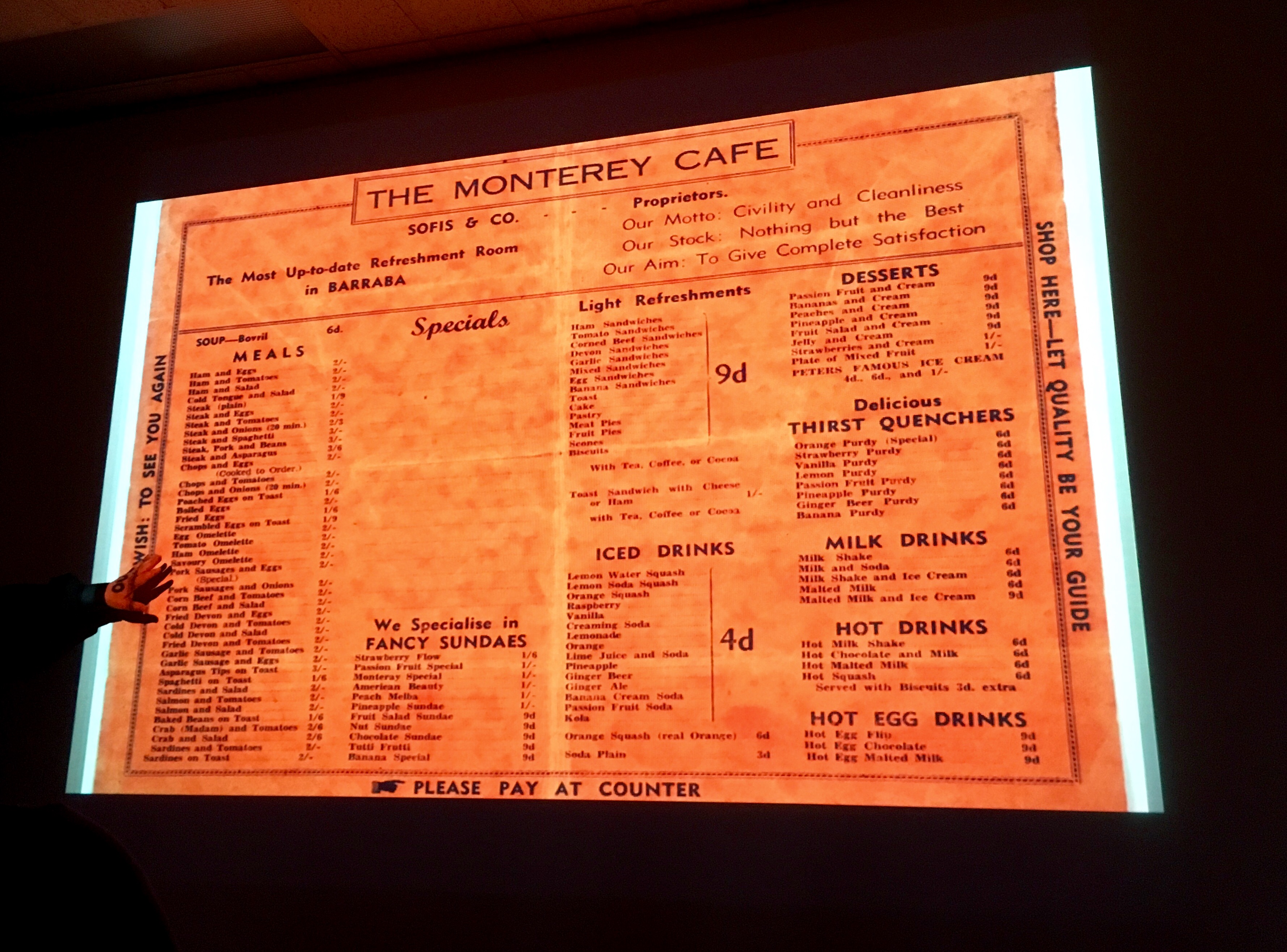
First it was oyster saloons or oyster parlors (back when oysters were cheap), which they soon transformed with burgers and other foods they’d seen in America. Then they had the ingenious idea of taking soda fountains, traditionally used in apothecaries for helping bitter medicine go down, and making them customer-facing, adding syrups and flavours to create fun and social drinks.

how-the-greeks-influenced-aussie-eating_the-fidgety-foodie-3

A classic Greek café menu inspired heavily by popular American dishes – photo from Greek Cafes & Milk Bars of Australia

From soda the Greeks turned to milkshakes. New technology in the 1930s and the introduction of the Hamilton Beach Milkshake Maker made frothed milk drinks the beverage of choice. If you happen to have one kicking around from those times they’re worth an absolute fortune now. According to Janiszewski, the Greeks were even responsible for bringing in espresso machines… but it was the Italians who popularised them.

how-the-greeks-influenced-aussie-eating_the-fidgety-foodie-2

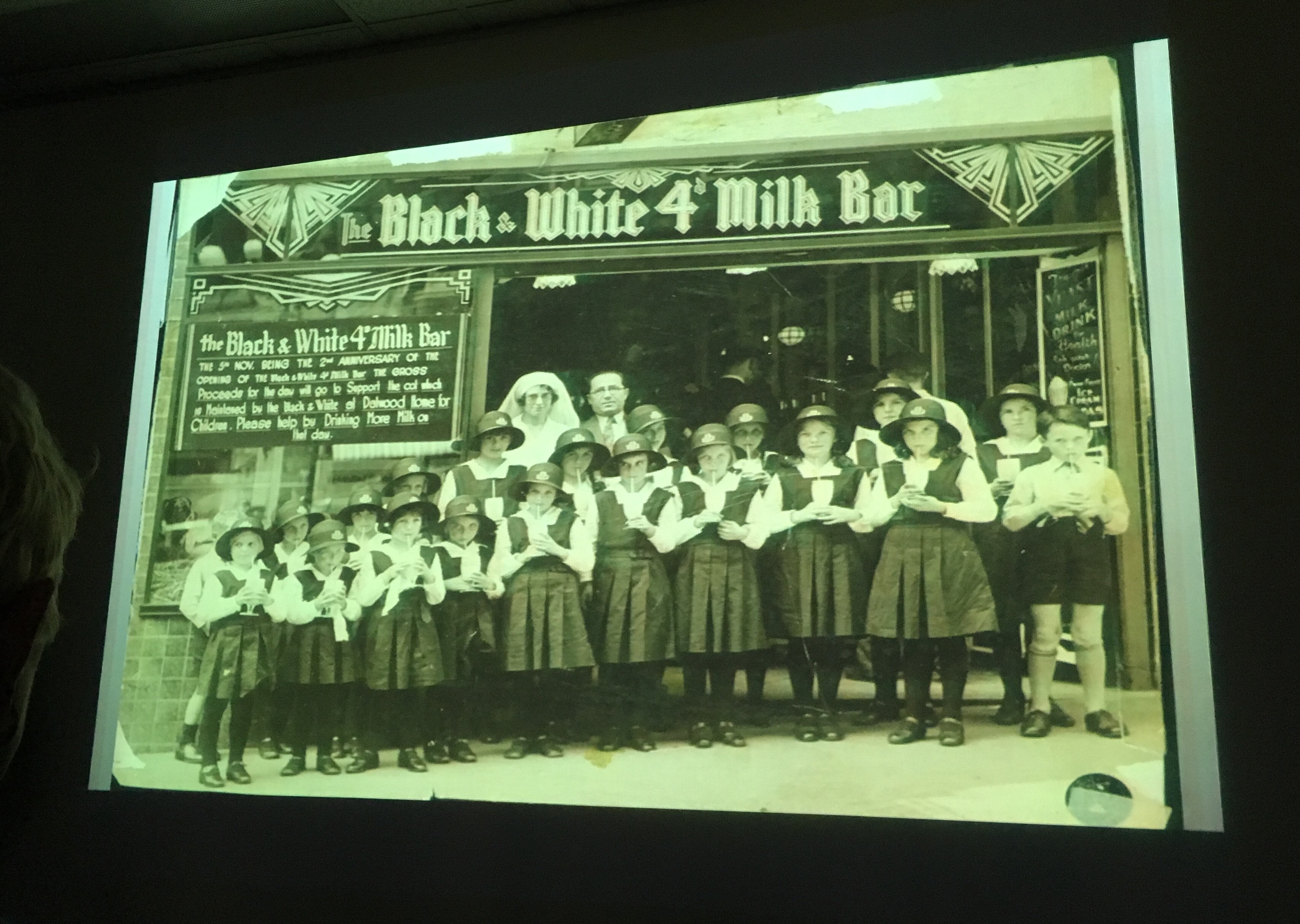
Martin Place’s Black & White 4d Milk Bar – photo from Greek Cafes & Milk Bars of Australia

The Black & White 4d Milk Bar in Martin Place was Australia’s first milk bar. When it opened in 1934, 5,000 people lined up for a milkshake on the first day. My Papou Peter, pictured at the top of this story, actually ran the Black & White 4d Milk Bar at one stage. This was the start of a movement – by the end of the decade there were around 4,000 milk bars around Australia. McDonald’s would kill for that sort of market penetration these days.

niagara

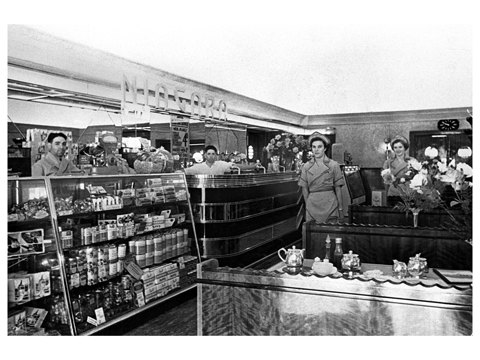
The Niagara Café in Gundagai – the gent in the middle is my Papou Con

One of the better known Greek cafés, which still survives today, is the Niagara Café in Gundagai. From 1919 to 1983 it was owned by the Castrission family and my grandfather, Con Castrission, worked there when he first came to Australia. That’s him in the white shirt in the above photo, looking out from the bar. I’d really like to visit Gundagai one day and experience the café that was so influential in my family. My Papou Con went on to run his own café, The Astoria, in Echuca, before coming to Sydney to run Wynyard Fish Supply.

Read More

Making dolmades with yiayia

thefidgetyfoodie_dolmades (7)

Delicious dolmades

I love to cook. No surprises there.

Pouring through the pages of a culinary tome and diligently following the instructions is a great way to reach gastronomic heights.

Or you can cook with my yiayia Alexandra and watch how she uses her instinct and years of experience to freestyle her way through a dish, never producing anything less than perfection.

thefidgetyfoodie_dolmathes11

Yiayia Alexandra at work

My yiayia Alexandra was never taught to cook. She talks about her mother’s cooking with pride but never had a chance to learn from her because she spent her teens working in the family’s olive grove and was then whisked off by boat, alone, to Australia at the tender age of 19.

She initially lived in the small country town of Giri with her aunty and worked in the family café making sausage rolls and pies for the local farmers. It was only when she married and moved to Sydney that she learnt to cook and over the years of bringing up a family she became known for her culinary prowess. Not an easy task considering her husband, my Papou Peter, was a seafood chef.

thefidgetyfoodie_dolmades (6)

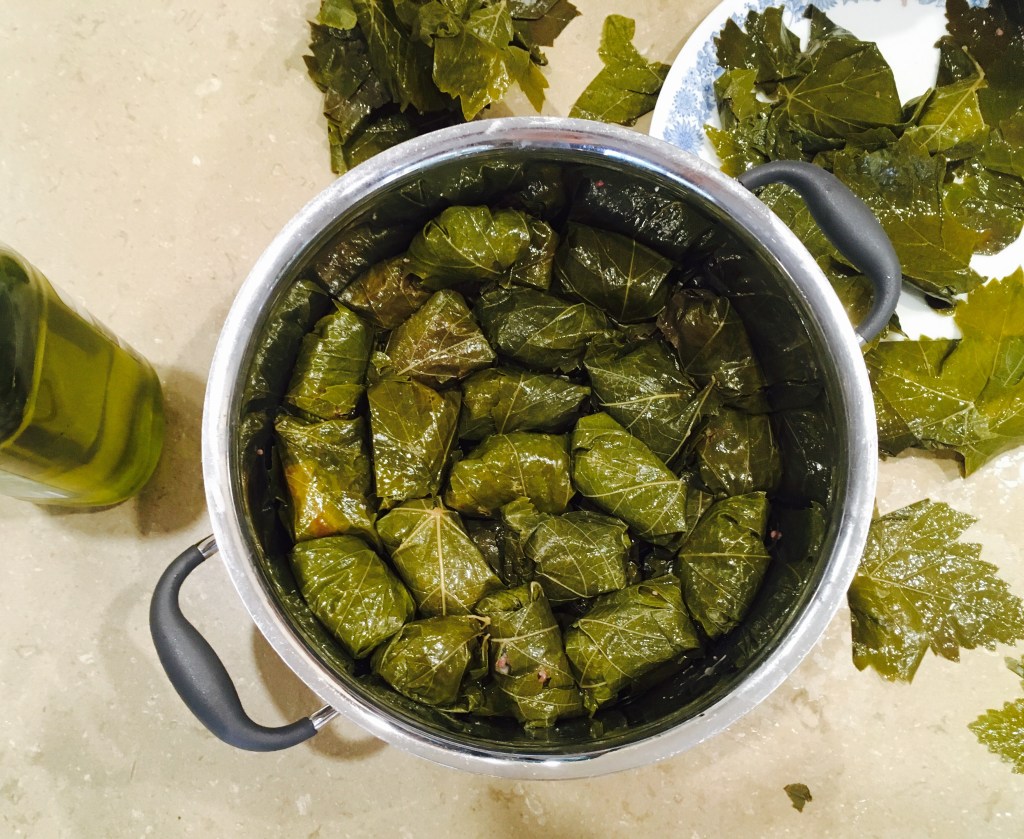
Dolmades are packed tight before being cooked

I’ve cooked and eaten many delicious Greek dishes from yiayia (I can’t think of a single occasion when she’s veered from Hellenic cuisine) but one dish I’ve never seen either of my yiayias cook is arguably one of the more recognisable Greek mezedes, dolmades.

I asked my Yiayia Maria once why this was and she told me it was because her husband, my Papou Con, didn’t like them. She had therefore never made them while he was alive and sure as hell wasn’t going to start now, even though he’s been dead for over thirty years.

thefidgetyfoodie_dolmades (9)

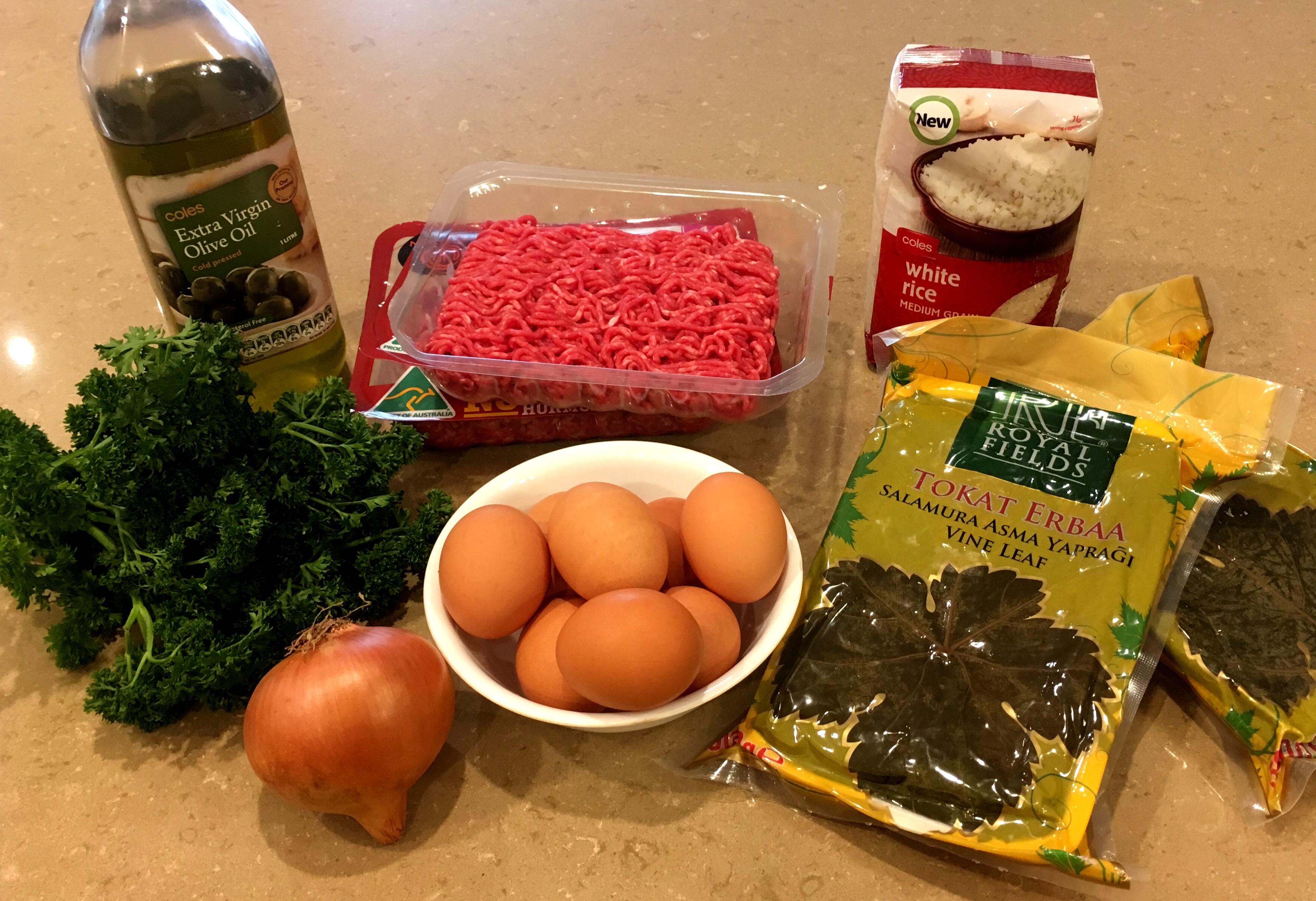
The bare ingredients

So I turned to Yiayia Alexandra to show me the ropes. I’ve only ever eaten rice stuffed vine leaves but it turns out yiayia had other ideas so we went shopping to pick up beef mince along with rice, parsley, onion, eggs and of course vine leaves.

thefidgetyfoodie_dolmades (3)

Yiayia works the mince mixture with her hand

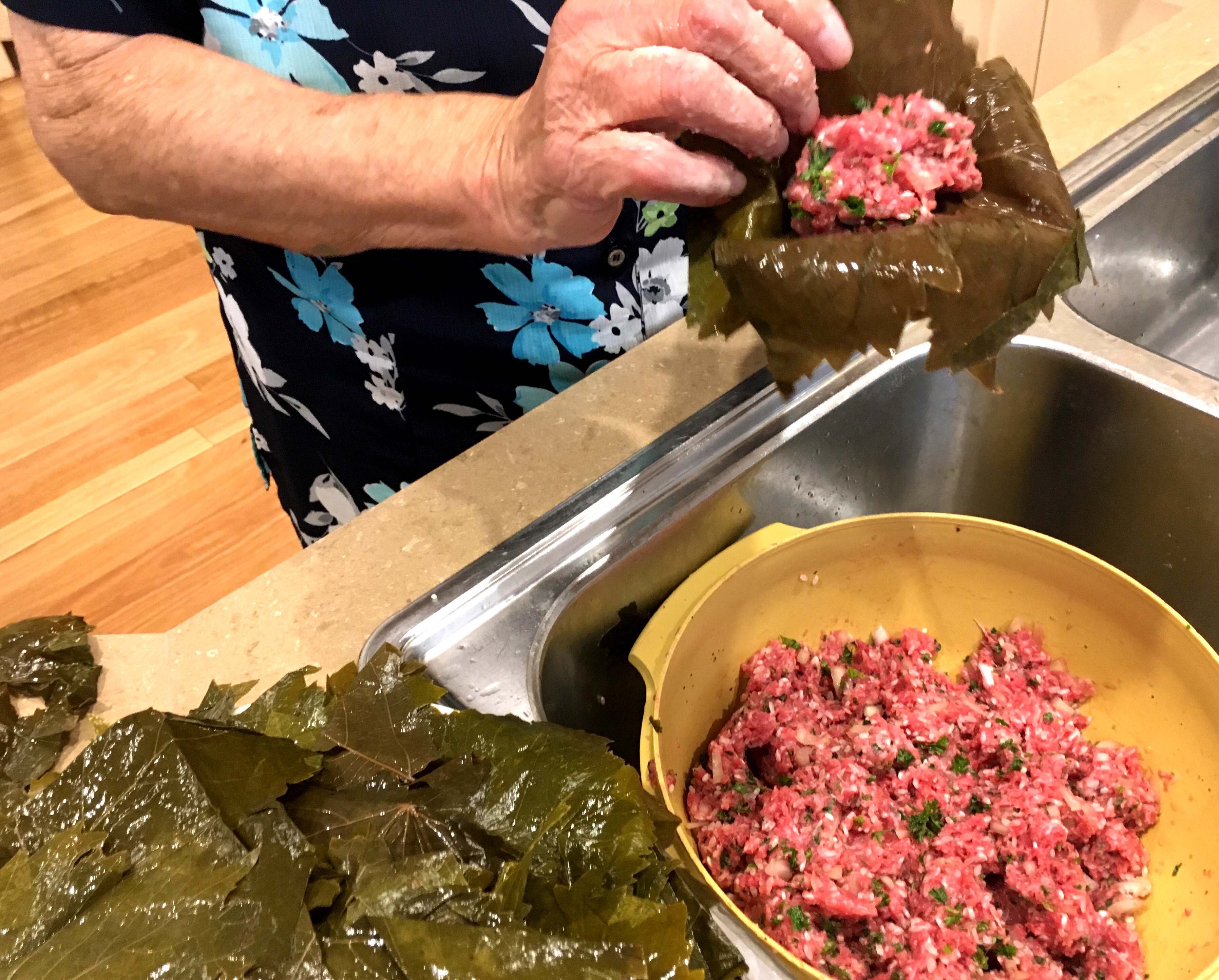
Back in the kitchen, yiayia rinsed the salty packed leaves while I was tasked with chopping the onion and parsley. Yiayia worked them into the mince with her hands along with eggs, salt and pepper.

thefidgetyfoodie_dolmades (4)

Yiayia is a master at the stuffing technique

It’s the assembly stage of dolmades that takes time. We stood side by side for the next half hour, the concentration dripping from our pores as we carefully layed out the leaves, filling them with the mince mixture and rolling them up into little fingers. Read More

Why Greeks love weeds

Picking and cooking Greek horta with yiayia

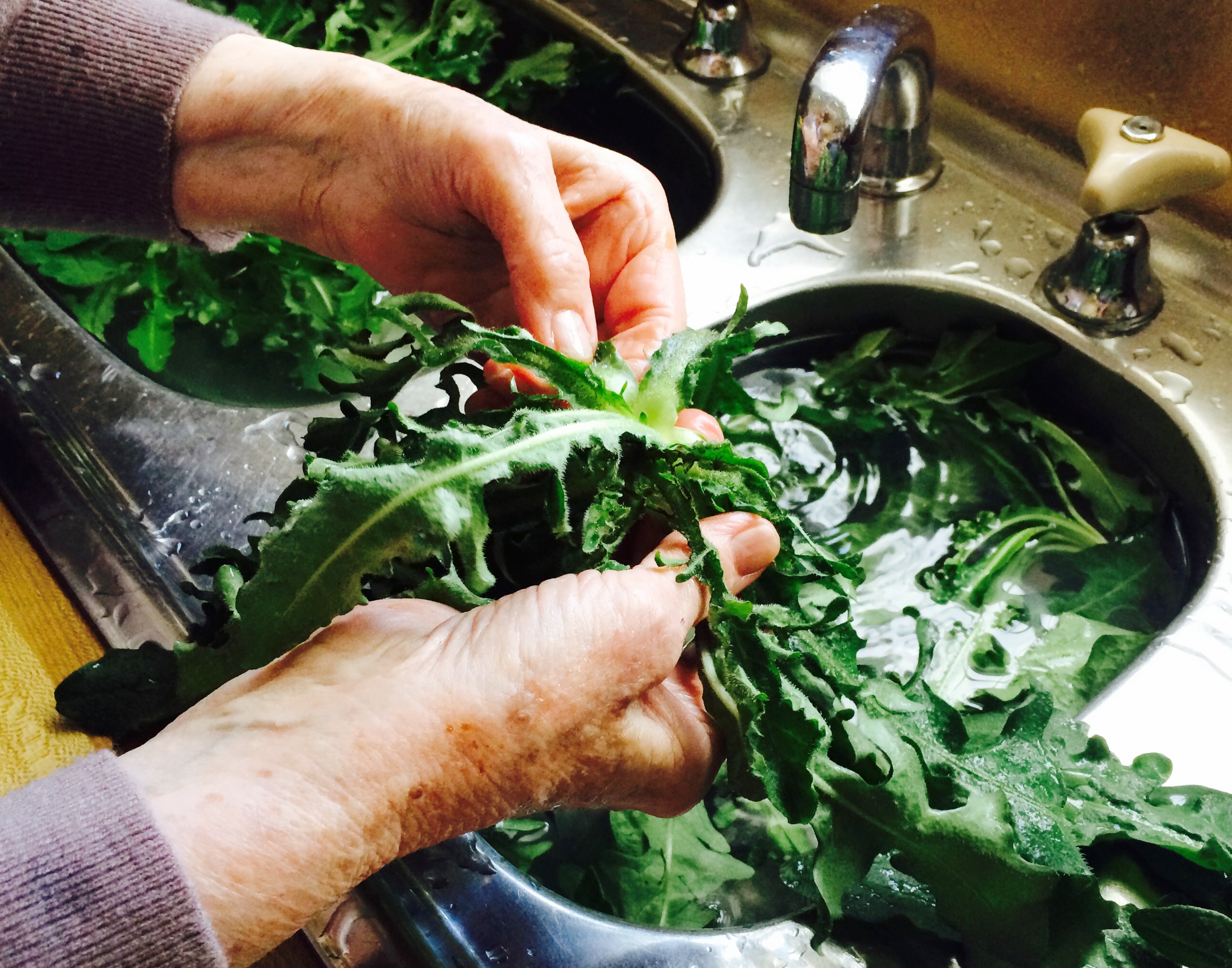
Yiayia checks the horta thoroughly for dirt

Horta, or ‘weeds’, are a staple in every Greek household and foraging for these leaves is a national pastime. I’ve grown up eating mounds of these greens, lovingly tossed with olive oil and lemon, and nothing makes me happier than collecting them with my yiayia. And if I’m lucky, I get my own bag of weeds to take home.
‘Horta again?’ she wailed to her mum as the plate piled high with freshly steamed greens hit the table.

‘Yes’ came the firm reply. ‘They are so good for you’.

Okay so maybe that child was me. Admittedly I had little appreciation for greens back then but this quickly changed somewhere in my early teens and now I can’t get enough.

Picking and cooking Greek horta with yiayia

See why they’re called weeds?

Horta, from the Latin word hortus meaning ‘garden’, literally means ‘weeds’ in Greek and encompasses a range of indigenous greens including wild spinach, endive, fennel leaves, dandelions, amaranth and nettles. In the Greek countryside it’s a common sight to see yiayiathes bent over with baskets collecting wild greens. The Greeks were foraging long before René Redzepi made it cool.

Picking and cooking Greek horta with yiayia

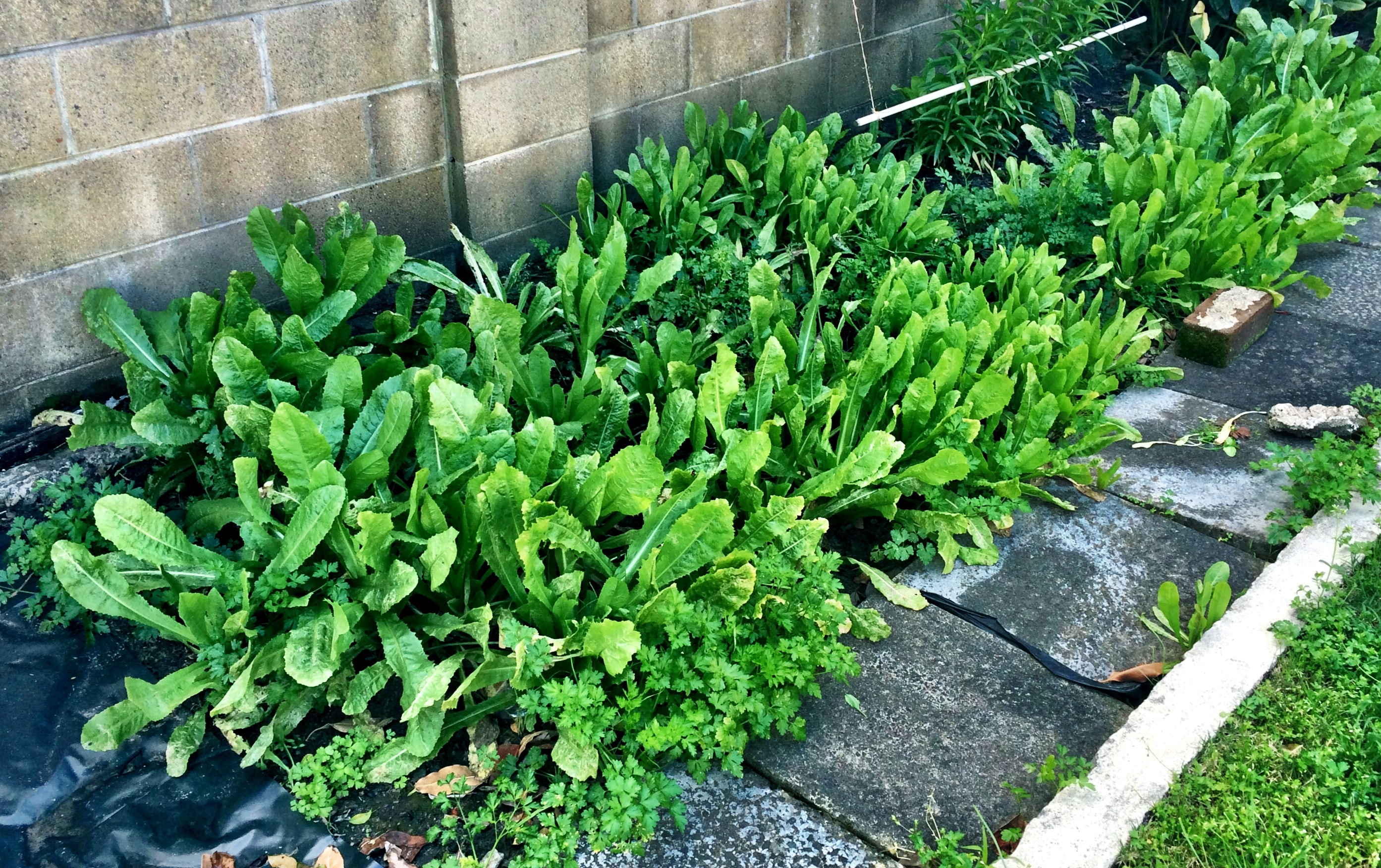
Yiayia’s row of planted horta

Those weeds were plentiful in our house while I was growing up because yiayia would regularly drop around piles of the stuff. The idea of having fresh greens dropped off on a weekly basis seems like such a luxury now.

Picking and cooking Greek horta with yiayia

Rogue rathikia at their best

But I can still get my fill with regular visits to see yiayia. At this time of year it’s the rathikia (dandelion) that’s in full bloom, in a few months it will be vlita (amaranth).

Yiayia is so adept at growing horta that it shoots up energetically, not only from the vegetable bed but from random pockets all over her yard.

Picking and cooking Greek horta with yiayia

A good healthy bunch of rathikia

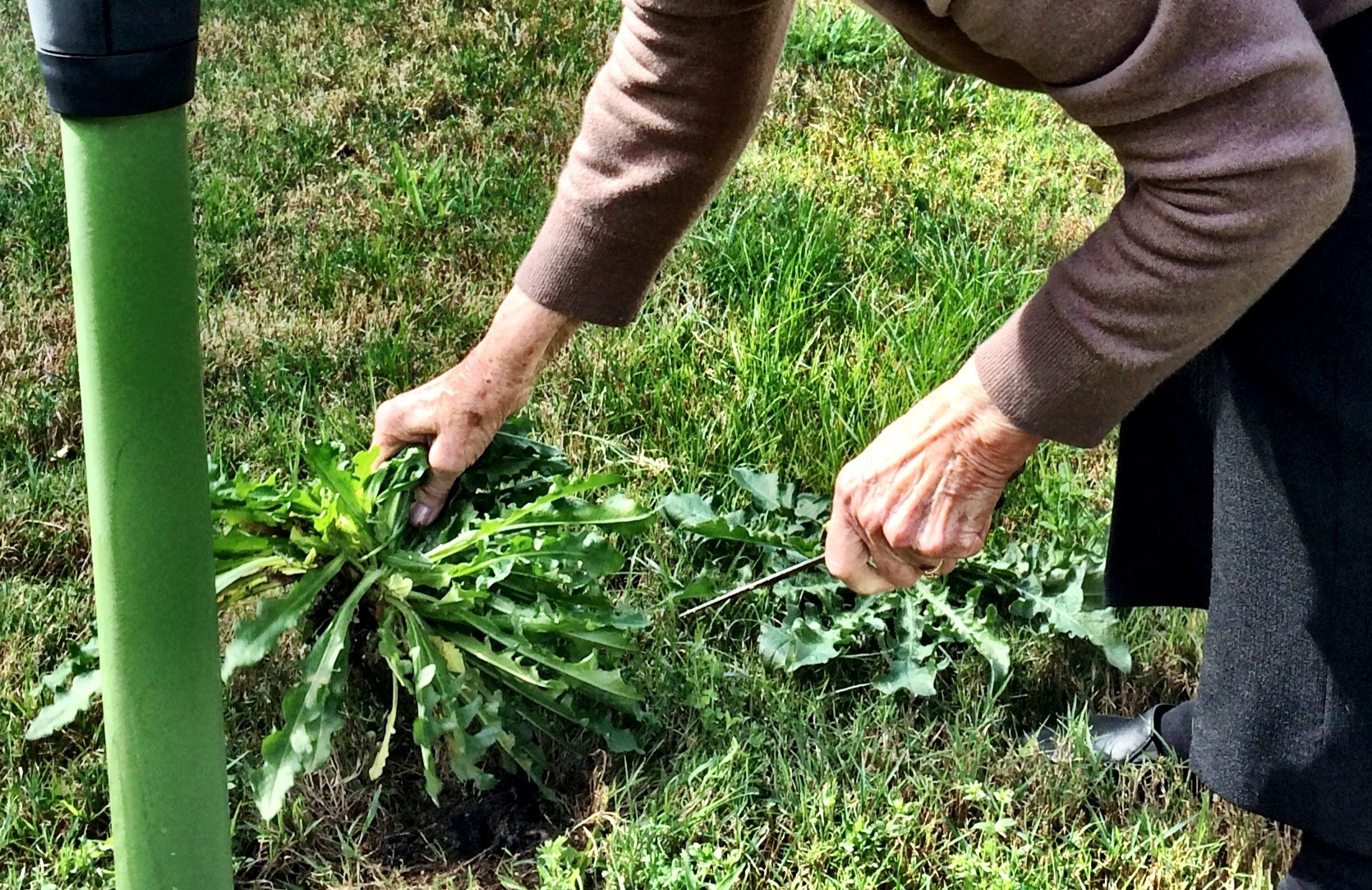
On my latest visit, yiayia took her knife and carved out a number of rathikia plants for me. I honestly couldn’t tell if we were collecting greens or weeding the backyard. Read More

Avgolemono: the best soup you’ll ever taste

IMG_9560

A bowl of yiayia’s avgolemono

Avgolemono

Anyone not Greek right now is struggling. It’s okay you can admit it.

Maybe not as much as the time you encountered galaktoboureko, but similar territory.

It’s not only a long word with far too many vowels but there is a silent letter that just throws the entire thing out of whack.

Av – wo – le – mo – no

See it wasn’t that hard. My recommendation is that you become familiar with this magical soup because it’s an absolute winner and if I had to consume nothing else all winter long I’d be a very happy girl.

So what is it? If you break it down it’s quite simple

Avgo = egg

Lemono = lemon

Egg and lemon soup. When I get to this point of the explanation I usually get strange looks.

Egg in a soup? How does that work?

IMG_9565

Meat and vegetables from the stock are served alongside the soup

It’s quite an unusual concept but once you try it you’ll be sold. The base of the soup is chicken stock (or lamb or fish) and this has to be made from scratch with fresh meat or bones, carrots, celery (personally I prefer leeks) and bay leaves. The meat and vegetables later become a side to the soup. Then you add rice. So far so good.

 In a separate bowl you beat eggs and combine them with fresh lemon juice. Read More

Easter, the Greek way

IMG_1240

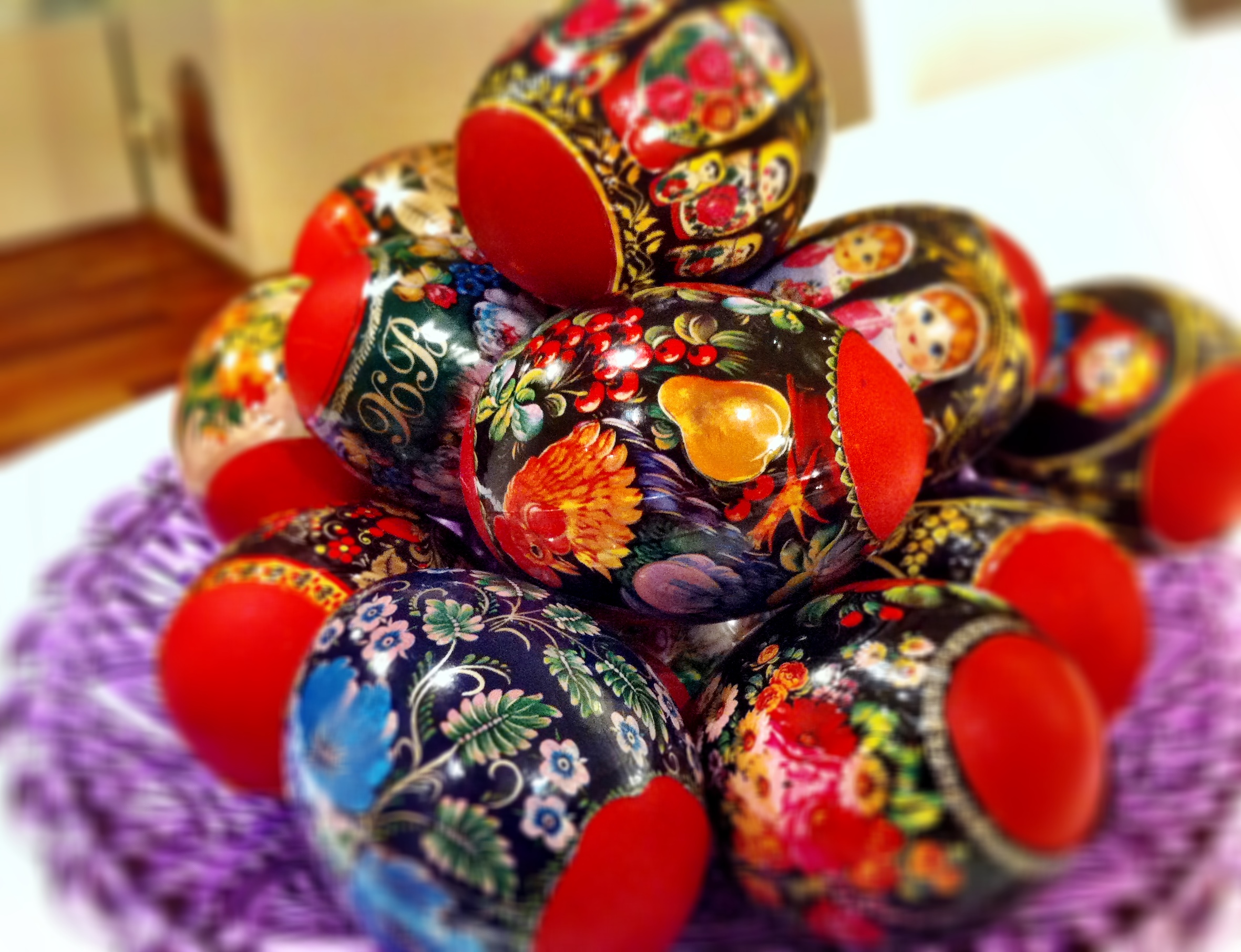
Red eggs for Greek Easter

Easter? But that was so last weekend right?

Not for the Greeks (and Serbians, Russians, Bulgarians and every other Orthodox religion out there).

We’re special so our Easter is a moveable feast. The date follows a modified Julian calendar which means it can sit up to a month before or after conventional Easter. Quite confusing when you’re small and marking the occasion before the hot cross buns have gone on sale in Woollies.

The lead up to Greek Easter (Lent) is a time of fasting. That means no meat, poultry, milk, cheese, eggs and fish with backbones. It’s a method for cleansing your body and soul (a precursor to the modern detox if you like).

To be honest, I was always more about the feast than the fast.

untitled

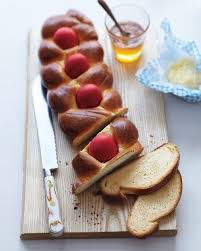
Tsoureki – photo courtesy of Martha Stewart Living

Forty days of fasting culminates in a 2am feast to celebrate the resurrection of Jesus – think magiritsa (offal-based soup that’s tastier than it sounds), tsoureki (brioche-esque sweet bread), avgolemono (egg-lemon chicken soup with rice) and of course, red eggs.

To be fair, fasting food is not to be sneered at. I completed the Easter-themed Kytherian Kitchen classes a few years ago and learnt how to make some exceptionally tasty traditional fasting dishes. Read More

Sunday cooking sessions with my yiayia

IMG_8680

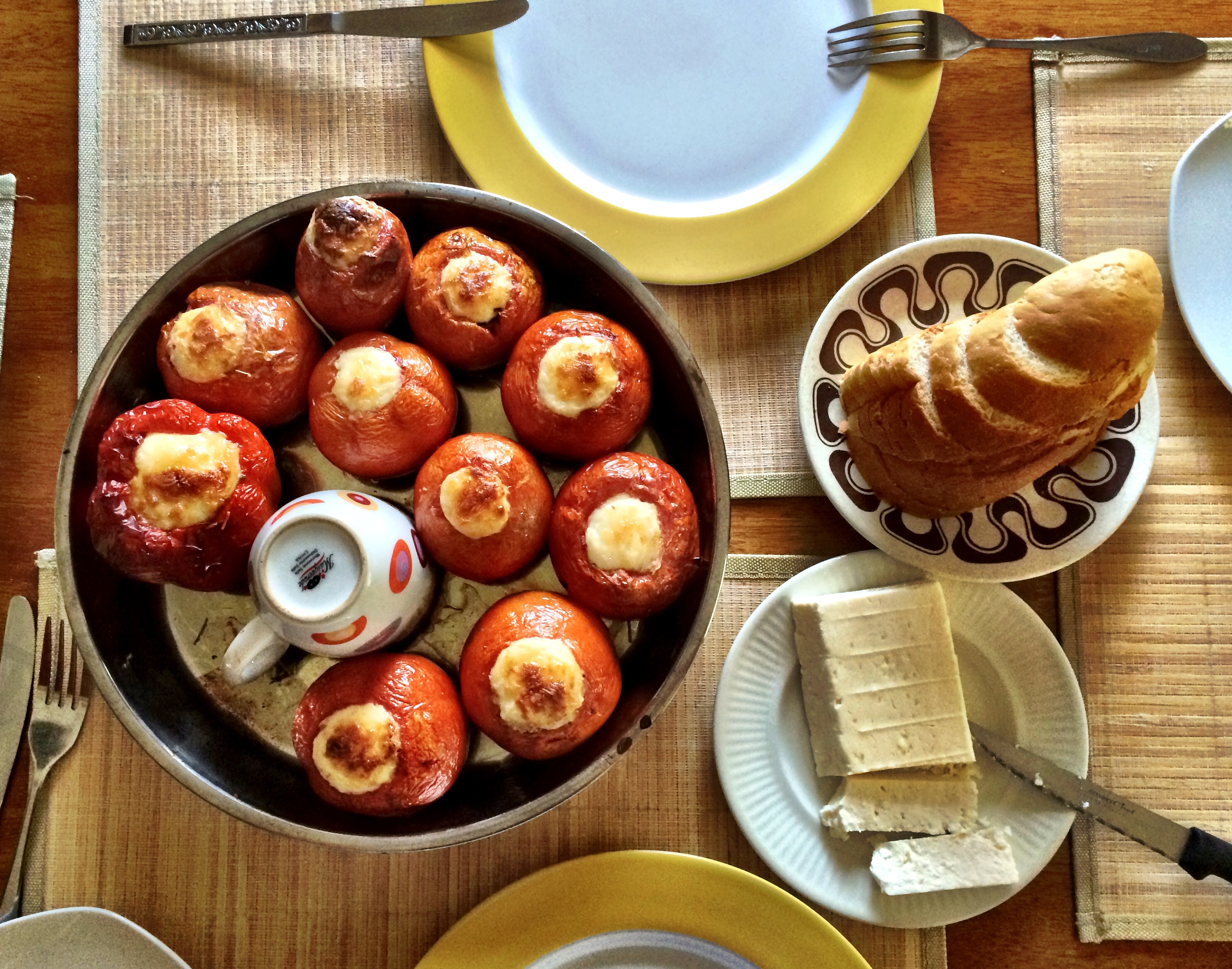
Yemista or stuffed tomatoes

Whenever I stop fidgeting for five minutes, my favourite place to spend a Sunday is at my yiayia Maria’s house – eating, cooking, raiding her garden for herbs, eating, playing gin rummy and more eating. Her mission in life has always been to feed everyone around her and you only have to look at my mum, sister and I to see that it’s clearly an inherited trait.

IMG_1311

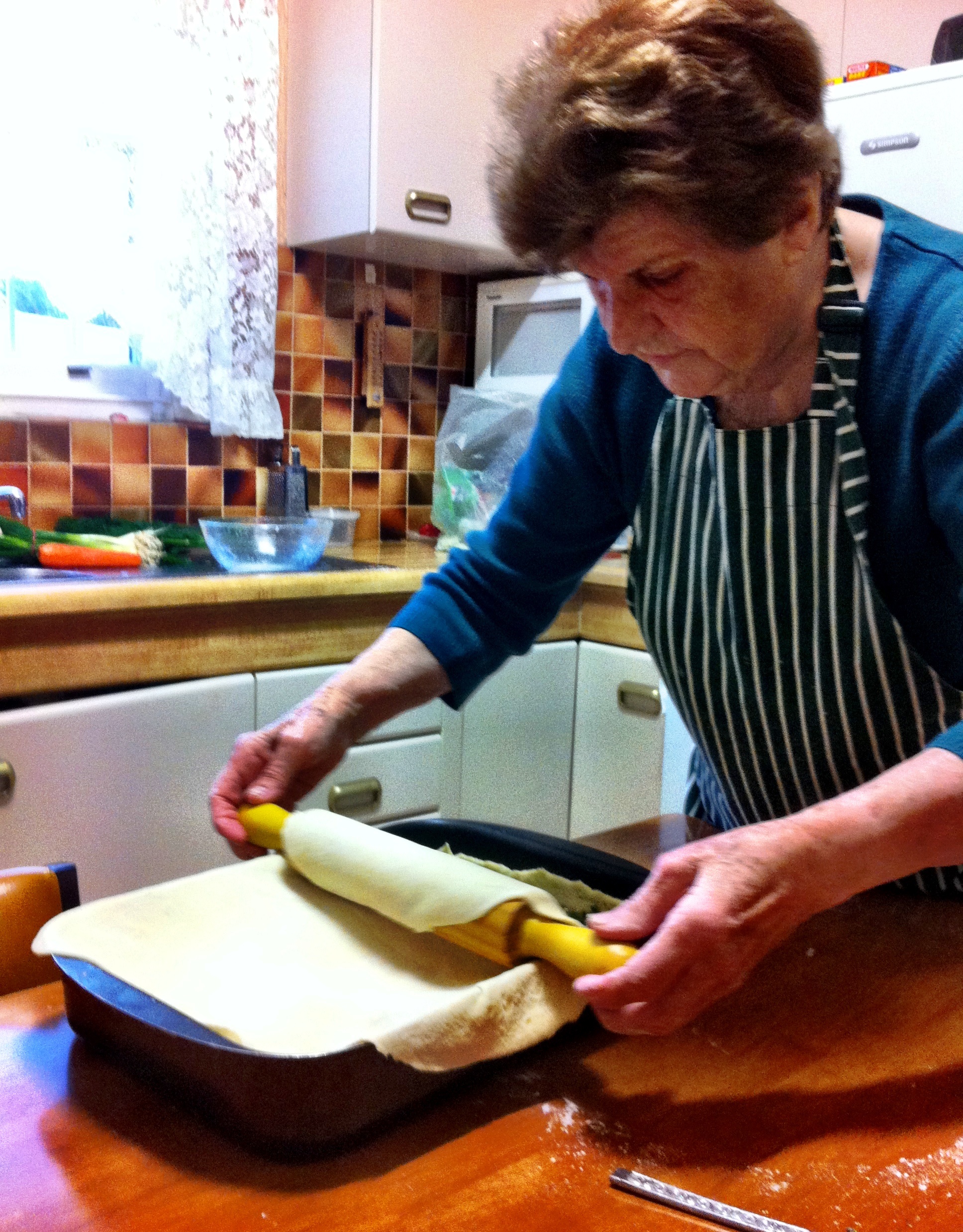
Yiayia could make spanakopita with her eyes closed

For most of my youth I took it for granted that yiayia’s cooking always tasted exactly the same (i.e. delicious). It wasn’t until I started to notch up my own miles in the kitchen that I realised that kind of consistency is hard earned.

IMG_1313

Spinach and cheese filling in the spanakopita

Of course I want my cooking to taste like yiayia’s right now so I’ve made a point of learning as much as I can from her over the years. Extracting a recipe is easier said than done though, and I have to watch her like a hawk to work out each step. She relies purely on sight and touch to know when something is perfect.

‘How much flour yiayia?’

‘Enough until the dough is ready Alexandramou’.

Of course yiayia!

IMG_1310

A spanakopita of this size lasts roughly fifteen minutes in my family

Lucky for me we tend to focus on savoury dishes, so a little variation in quantity usually doesn’t spell disaster. Spanakopita (cheese and spinach pie), yemista (rice and meat stuffed tomatoes) and keftethes (meatballs) are always a good starting point. I wouldn’t dare go freestyle on kourabiethes! Read More