Kythera… my island home

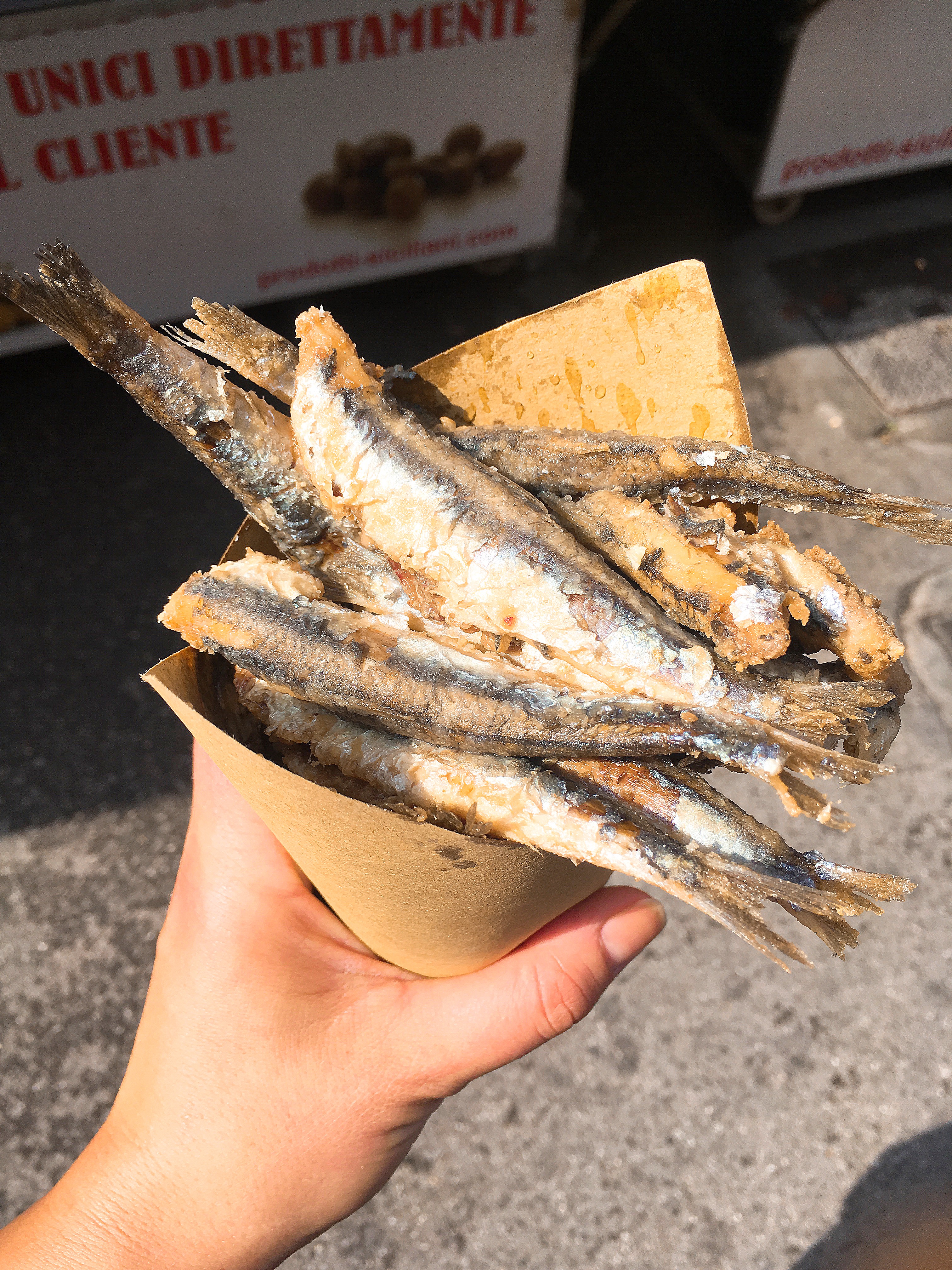
Fried sardines at Diakofti
Santorini, Mykonos, Crete, Paros.

Bet you’ve been there, strolled past the white-washed houses, tasted the moussaka and drunk the ouzo.

Yamas!

These are all gorgeous, albeit very-touristy islands. And rightly so. They ooze the essence of Greek island life with their bougainvillea-lined cobblestone laneways and evocative taverna lifestyle. Who doesn’t dream of living a Greek island lifestyle?

Except that the Greek island lifestyle wasn’t always so picturesque.

If it was, my papouthes and yiayathes would not have fled in the 1930s and 1940s respectively to start new lives in Australia.

Their Greek island was especially exposed. Its strategic location in the Ionian Sea had made it a red hot target through history and any conqueror worth their sea salt made their way there; Venetians, Turks, French, English, Nazis…… when my Thea Marika once pointed to the second-story of the family home dating to the 1500s and told me they used to hurl hot oil through the window to scare the pirates below – she wasn’t kidding.

That island is Kythera.

Where you ask?

Exactly.

The iconic twin bays of Kapsali

With the pirates now less of an issue, Kythera is the under-the-radar Greek island that you’ve never heard about and with any luck it will stay that way. Its strategic location, marooned between the Peloponnese and Crete, was a drawcard for those pirates but doesn’t suit modern-day travellers. You can’t ferry hop easily the way you can between the Cycladic islands. There’s only one flight a day in summer in a plane that fits 20 people. Traverse the island’s perilous roads in a bus at your peril. Mass tourism is literally not possible.

Which means that the only non-locals you encounter when you visit are the other Kytherian-Aussies who visit in droves in the summer months. Locating my extended family is as easy as strolling along Kapsali beach on my way to have a frappe.

It feels indulgent to have 100% lineage from one single island. To have visited the houses where my grandparents grew up and walked through villages bearing their name, e.g. Kastrissianika which is named after my Papou Con’s family. (Side note: where is the village of Megaloconomosanika?).

Being in Kythera reawakens part of my culinary soul. Of course I was eating the delicious food that originated from Kythera from the moment I started on solids. And many traditions followed my family across the sea to their new homes in Australia. But being in my homeland connects me to those traditions like configuring pieces of a puzzle.

Dad points out Papou’s hut through the horafia

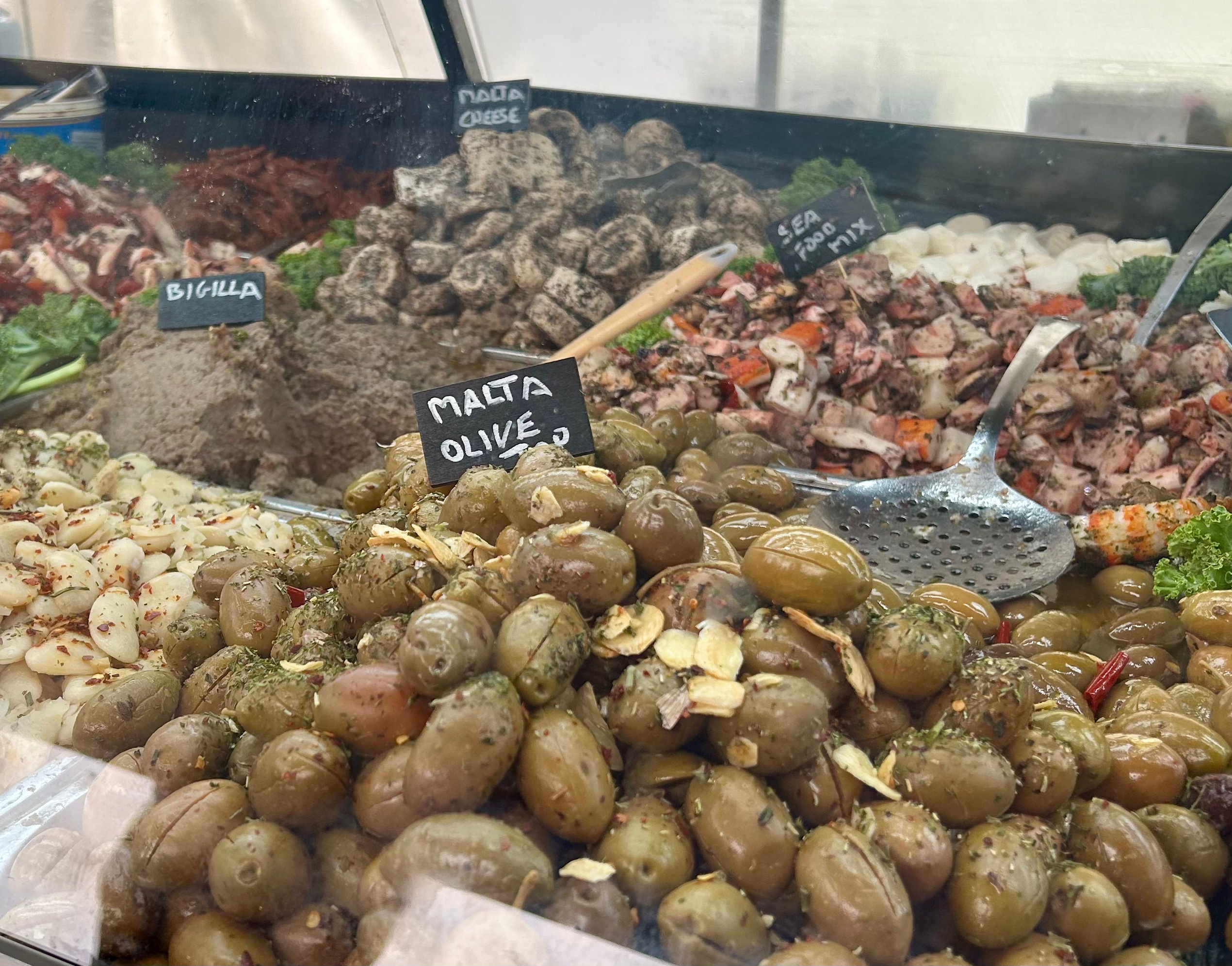
Olives – the bedrock of Greek culture – are a good place to start. The foliage makes up crowns, the fruit is delicious to eat and the oil is essential in rituals (and deters those pesky pirates). I’ve always maintained that the secret to Greek cooking is 50% love and 50% olive oil. But that never feels as prescient as it does when I am standing in the olive groves that have been part of my family’s subsistence for over 100 years. While one olive tree looks the same as the next (at least to me), what sets this grove apart is the hut at the back that my Papou Peter built when he was a teenager so he would have somewhere to sleep when spending long days tending to the trees.    

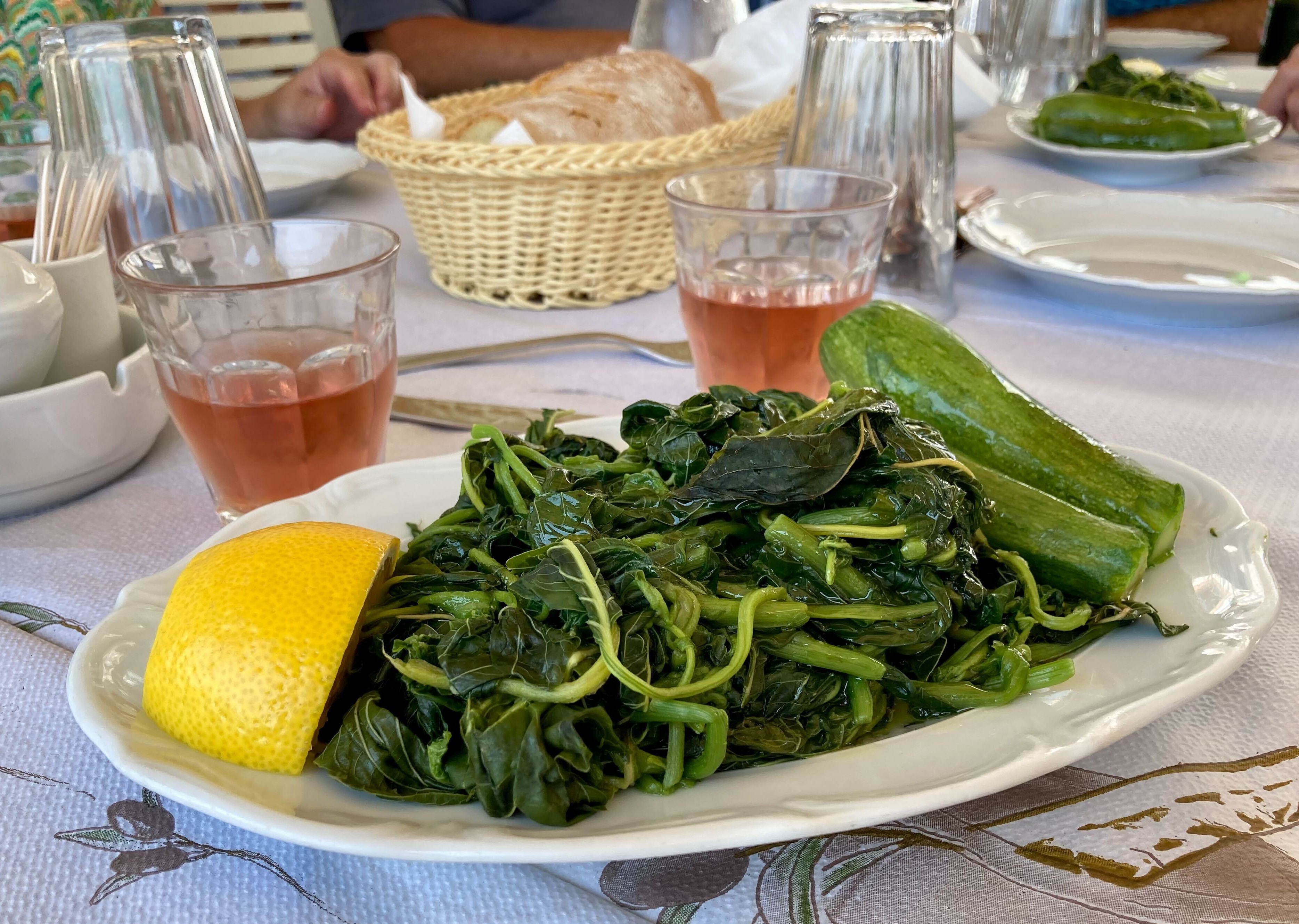
A plate of the good stuff… horta

The other main source of subsistence was horta, or wild greens, which I have written about before in an effort to explain why Greeks love weeds. Not a single meal on my recent trip passed without a bowl of vlita on the table with lemon and olive oil.

Give me horta and horiatiki (Greek salad) and I’m happy” declared mum.

Fresh vlita at the markets

It’s hard to find the exact same greens in Australia. There were murmurs of smuggling in seeds from Kythera so we could recreate the exact breeds here. I’m fairly sure the older generations did exactly that.

While vlita is in season during summer it switches to rathikia a few months later. Eating in season is the only way Greeks eat and it’s a revelation. You want figs in July? Go home and come back in August because that’s when they’re in season and that’s when you’ll get them. Not a moment before or after.  

Kolokythi with horta and octopus

That’s the reason why kolokythi, zucchini, was in every second dish while we were in Kythera. It was in season, it tasted great, so the entire island got involved. The idea of bringing in produce from elsewhere so it’s always available is never a consideration. We ended one meal with fresh karpouzi or watermelon. Our host noted that watermelon wasn’t grown on the island and it had come from the Peloponnese, in a tone of regret that implied the Peloponnese was a far-flung foreign country versus being the Greek mainland.

That was a particularly memorable lunch. It started at 3.30pm, which seems ridiculous until you consider that dinner is usually eaten around 10pm.  Once you acclimatise to Greek time you never look back.

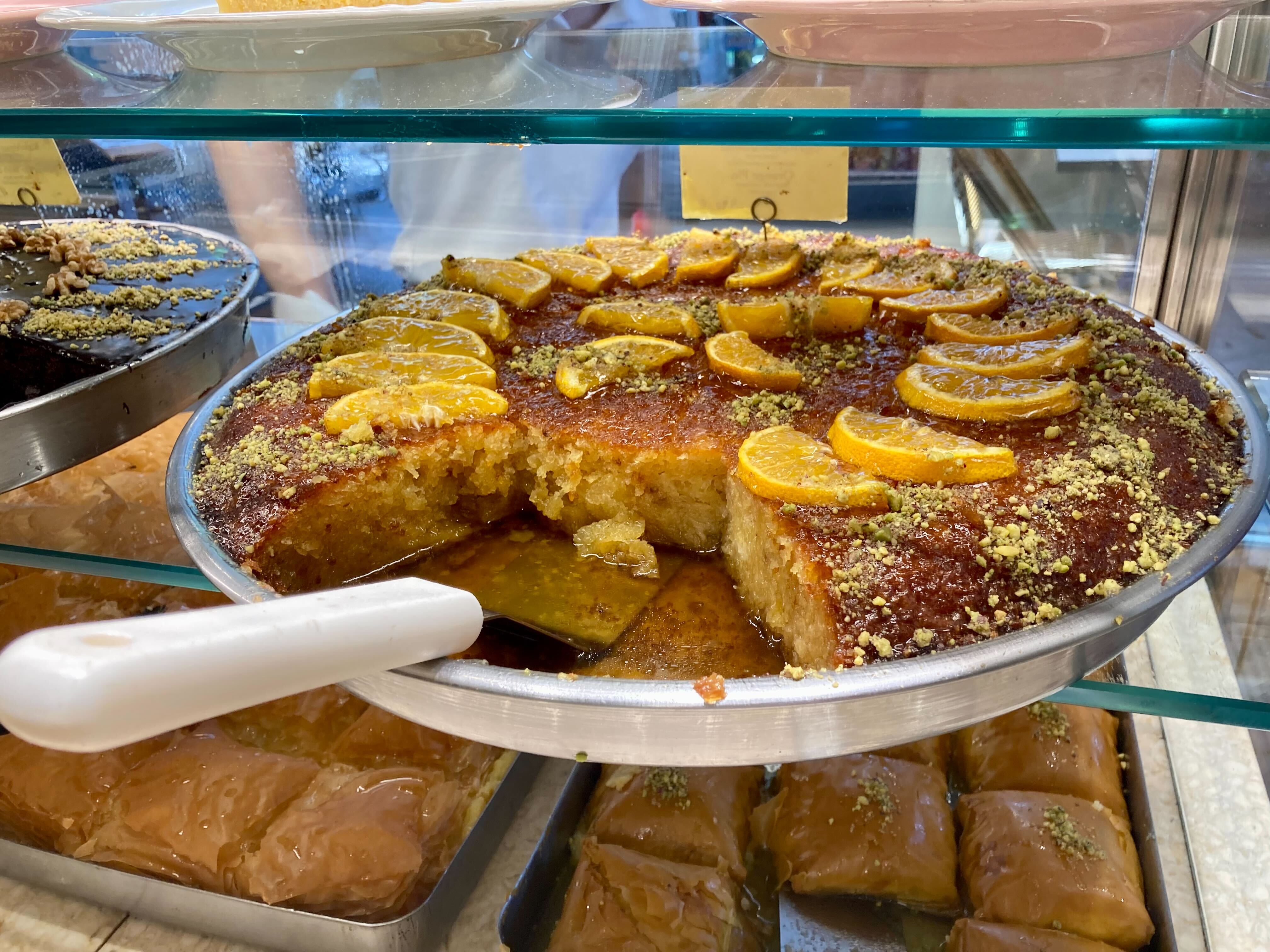
Portokalopita

The cocky foodie in me thought I had Greek sweets down pat. I’ve been known to eat galaktoboureko for breakfast and will move heaven and earth to track down the best bougatsa in town. I didn’t expect to unearth a new (for me) sweet and was delighted when I did. It was mum who put portokalopita on my radar and we ate our way through copious amounts while on the island. It’s made from phyllo drenched in orange syrup and I am now officially obsessed. No Greek cake shop in Sydney seems to make it (why, why?!!) so I will have to turn my hand to it instead.

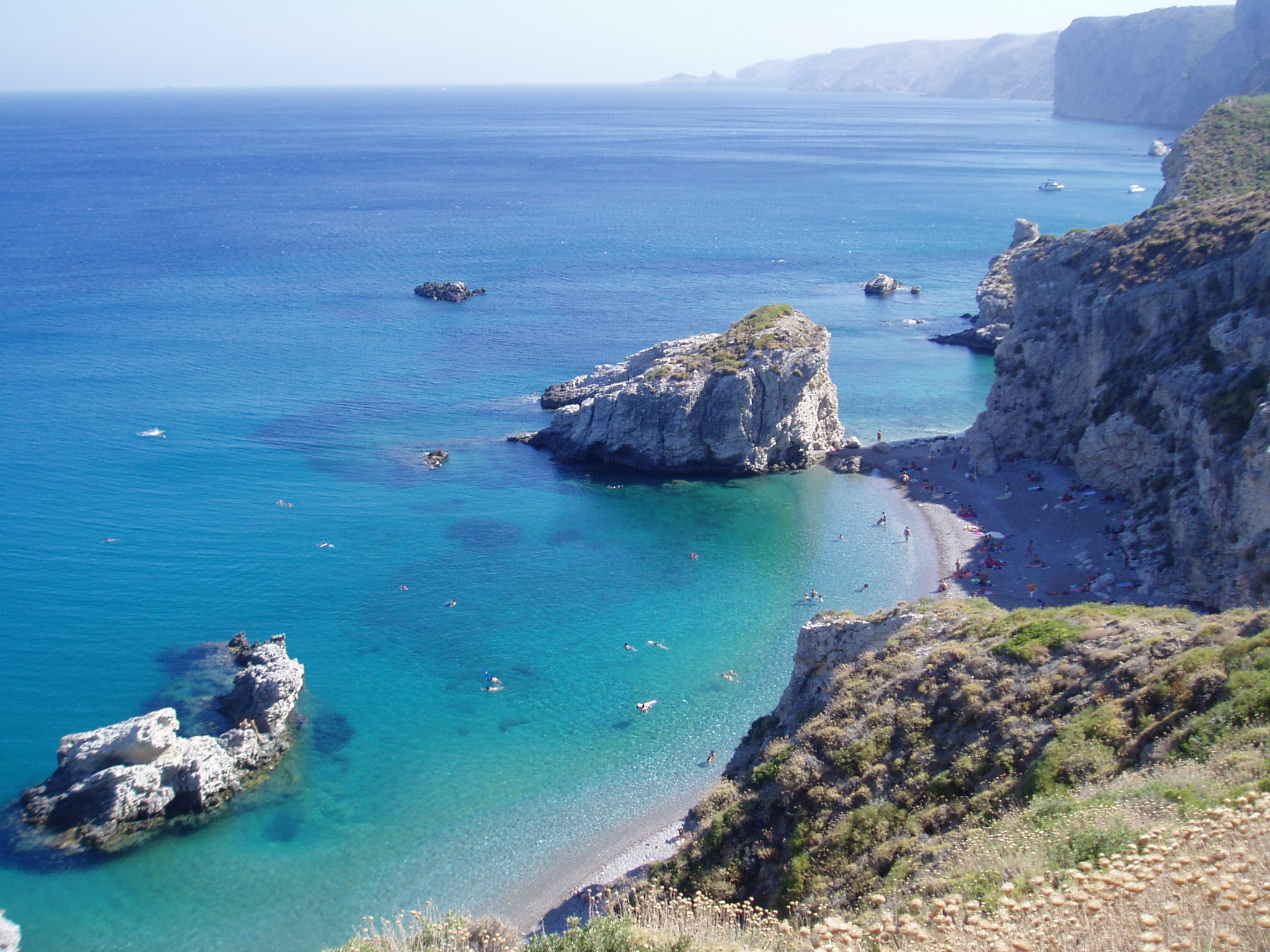
The stunning beach at Kaladi

It would be remiss of me to talk about Kythera without talking about the sea. The waters around the island are special, but don’t take my word for it. The ancient poet Hesiod recounts in his epic Theogony that Aphrodite, the goddess of love and beauty, was born in the foam of the sea of Kythera. As far as I’m concerned we’re distant cousins and I’ve forgiven her for defecting to Cyprus.

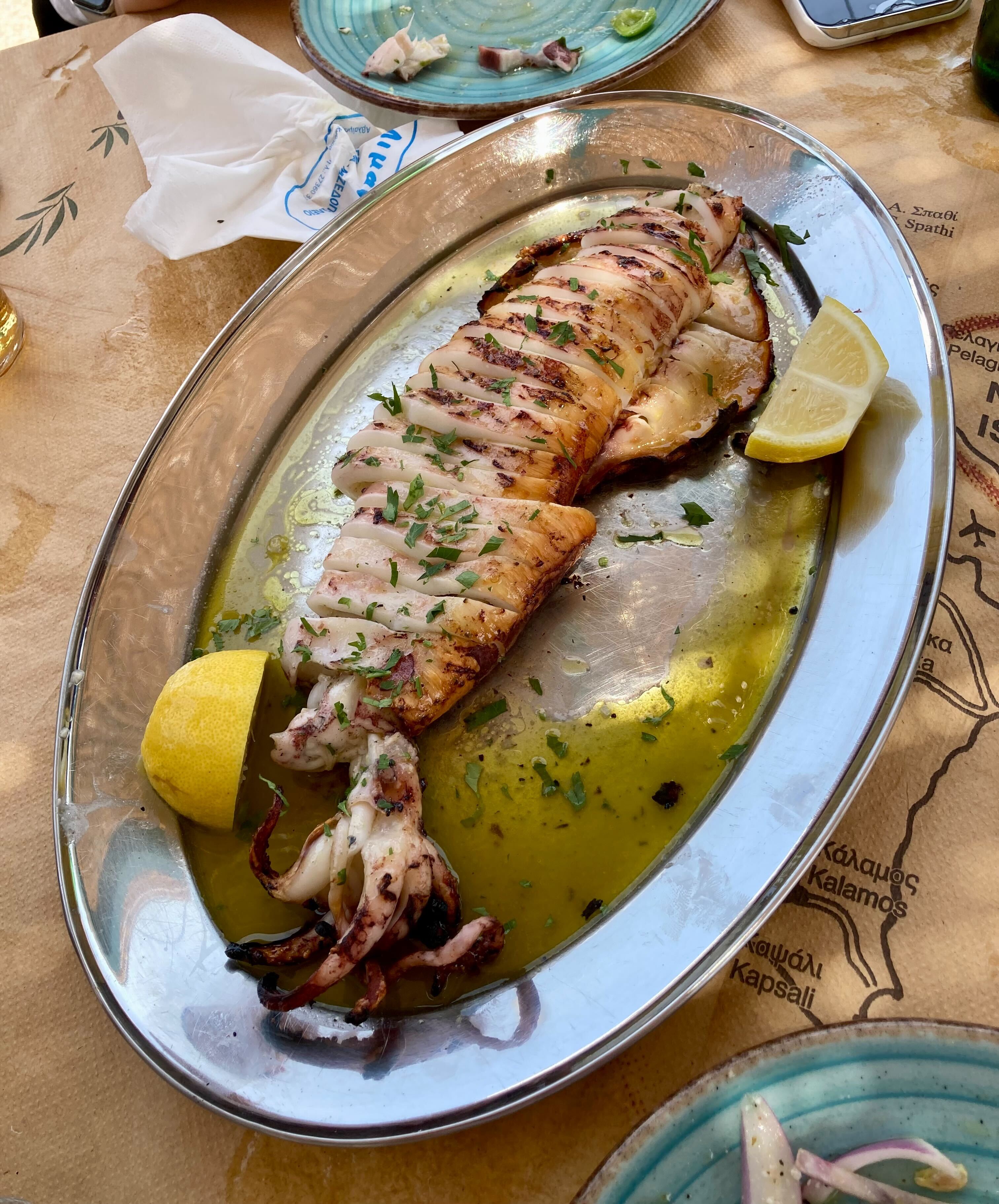
Freshly grilled calamari

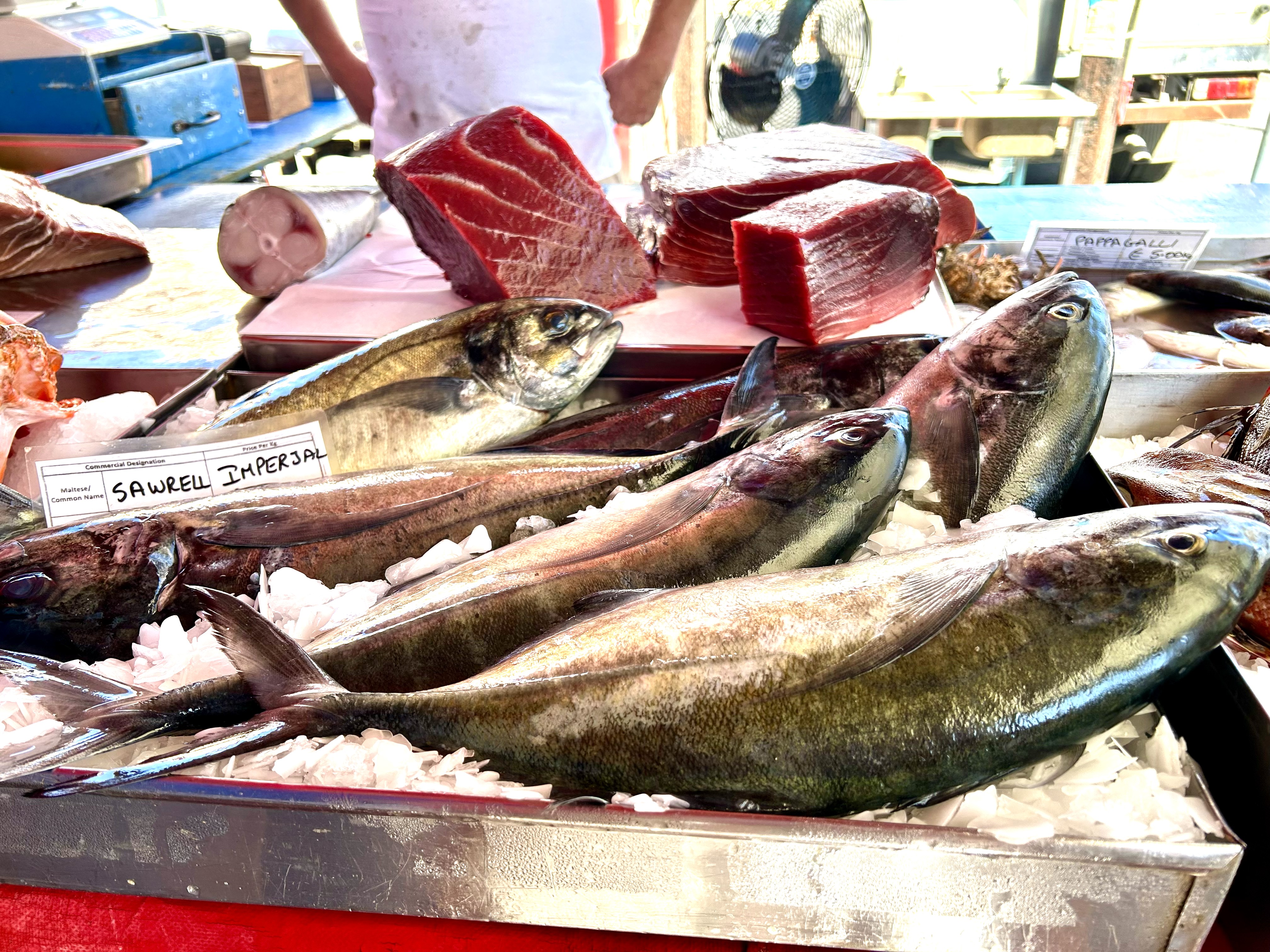
The influence of the sea is strong in my family. Both of my papous were in the Greek navy. By the time they came to Australia their maritime roots ran deep and profoundly influenced their lives. My Papou Peter was a deep-sea fisherman and also the seafood chef at the Royal Automobile Club. My dad was the lucky kid at school with lobster sandwiches in his lunchbox.

My Papou Con ran the most buzzing fish shop in Sydney in the 1950s and 1960s – Wynyard Fish Supplies – with his brothers. It was the go-to place for city workers to pick up their seafood essentials, especially on a Friday.

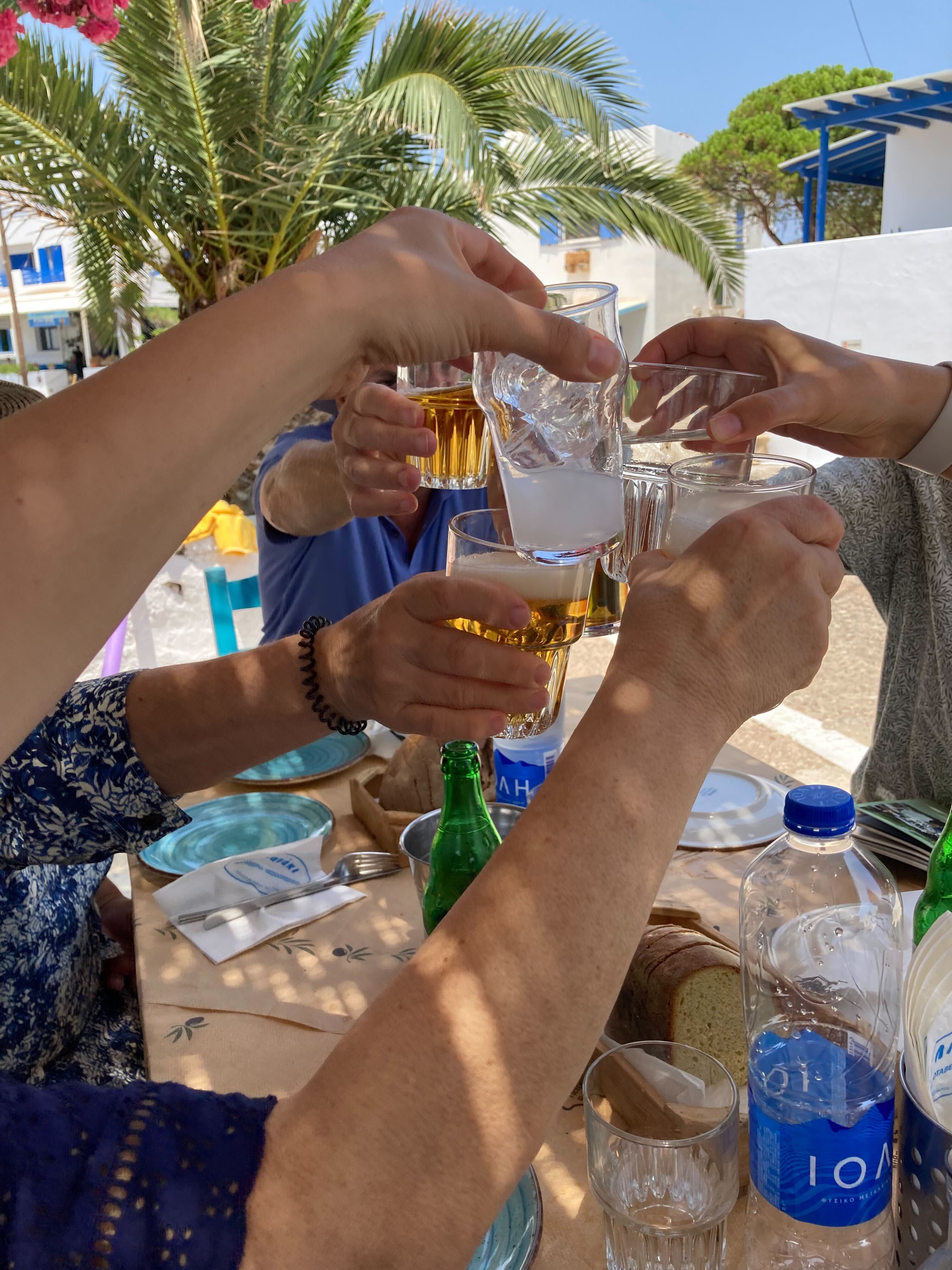
Special family moments over lunch

Greek food is never just about the food. It’s the vessel that brings loved ones together to share, laugh and live life. Holidays in Kythera revolve around your morning frappe, which taverna to meet at for lunch (Pierros in Livadi or Lemonokipos in Karavas?), and where to reconvene in the evening. On Sundays, the bulk of the 4,000 strong island gravitates to Potamos for the Sunday market and the chance to reunite with friends, complain over coffee and peruse the local gliko (spoon sweets) or ladi (oil). If the entire island didn’t already know you were in Kythera, they do now.

Beguiling Avlemonas

The beauty of Kythera is not just Aphrodite’s legacy. It’s not only the sand, sea and sweet smell of golden grass and olive wood (so intoxicating that French luxury brand Hermès has bottled it into a fragrance – Un Jardin a Cythere). Kythera is the origin story for this fidgety foodie and a place that will always feel like home.  

Memoirs of Russia

the fidgety foodie_memoirs of Russia

Would you like a menu with that?

With the World Cup starting in three days (thanks to work I’ve been counting down for a year) I thought it highly apt to dig back into my Russia files. I’ve raved about the Georgian food in Russia and a brilliant cooking class in Moscow, but what else did I take away from visiting the world’s largest (and often most provocative) country? Well mainly food of course…

the fidgety foodie_memoirs of Russia

A snapshot of Russian history told through vodka.

Vodka
And vodka obviously. Vodka is drunk like water in Russia. So it’s no surprise when you learn that the name stems from the Russian word for water, ‘voda’. It’s everywhere, and I was warned not to buy the dodgy cheap stuff, i.e. 1/2 litre for anything less than 200 Rubles (or about AUD$4.50!). That stuff can actually kill you. The ‘good stuff’ is still a quarter of the price you pay in Australia so what the Russians regard as expensive was still a bargain for me.

the fidgety foodie_memoirs of Russia

And even more vodka…

Naturally I had to check out the Vodka Museum which was a shrine to the stuff and told of its history and the role it has played in society and history. Take the tour and you get a complimentary shot of vodka (for research purposes only of course).

the fidgety foodie_memoirs of Russia

Choose your poison and your fridge.

And it wasn’t uncommon to find a vodka fridge next to a soft drink fridge. Even the Russians need to stay hydrated.

the fidgety foodie_memoirs of Russia

Picking pickles leaves me pickled pink

Pickles
I do love myself a pickle. I took great joy in fishing out pickles from salty brine while in Estonia and was happy to see a similar attitude to pickles in Russia, i.e. bring them out for every meal and feel free to snack on them in between. The pickles always hit the right balance of tartness and sweetness with me, and I even enjoyed the rogue dill fronds that would inevitable be wrapped around each one.

the fidgety foodie_memoirs of Russia

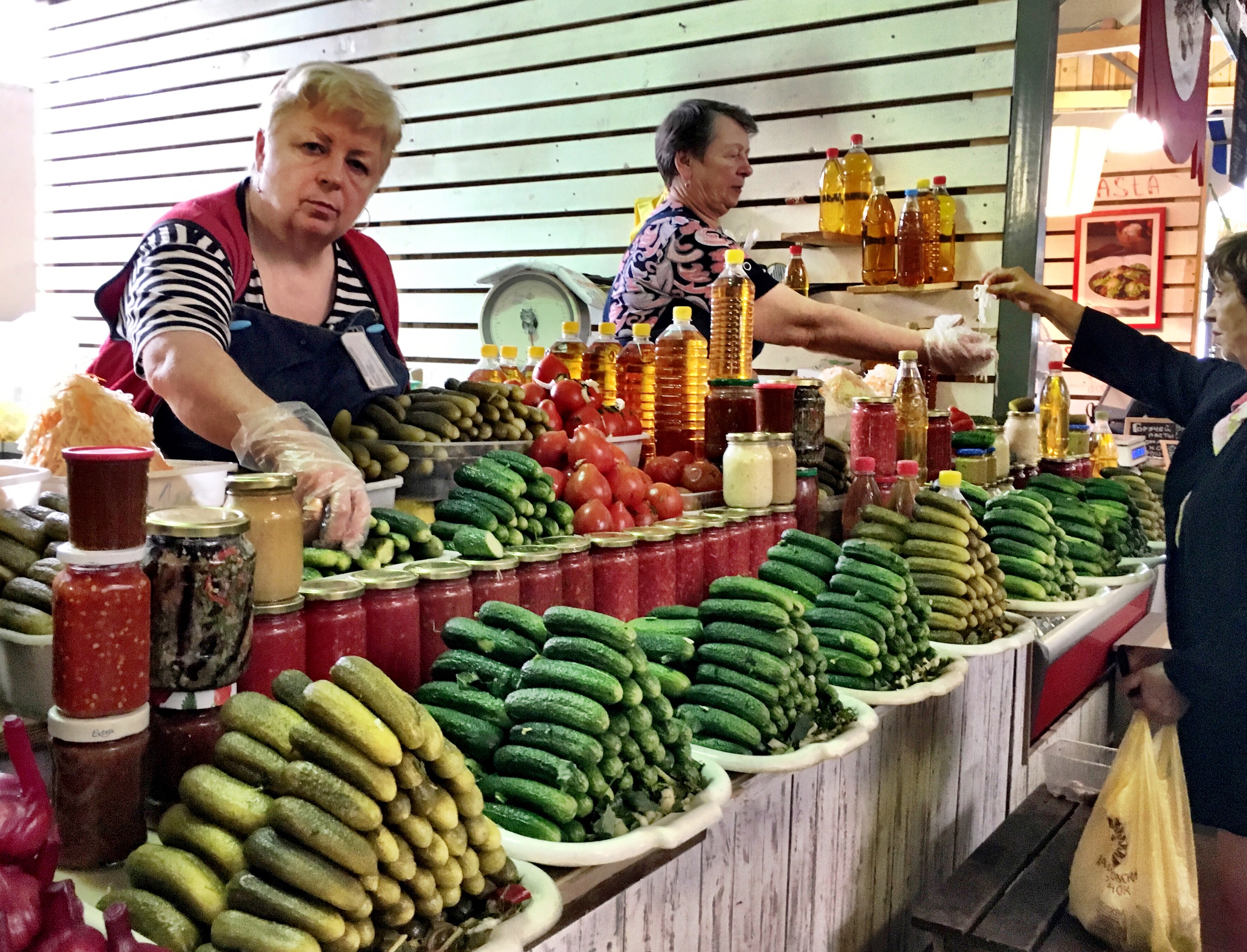
My favourite cranky Russian stall holder and her pickles.

There were entire pickle counters at the food markets where I managed to extract a couple of samples from a perpetually cross looking matron. Then of course there were plenty of tubs filled with homemade pickles lining the streets in smaller towns. I loved how it was entirely acceptable to buy a couple of pickles and eat them as you went about your day. Read More

6 crazy (but delicious) things to eat in Sweden

the fidgety foodie_6 crazy (but delicious) things to eat in Sweden

The table is set in a typical Northern Swedish household

Salmon. Check
Meatballs. Check
Cinammon buns. Check.

If you’ve come this far then you’ve certaintly sampled the obvious highlights of Swedish food.

But this cuisine gets so much better, and more creative, the more you delve.

On my last trip to Sweden I veered north and stumbled across some particularly unique delicacies which were most entertaining.

the fidgety foodie_6 crazy (but delicious) things to eat in Sweden

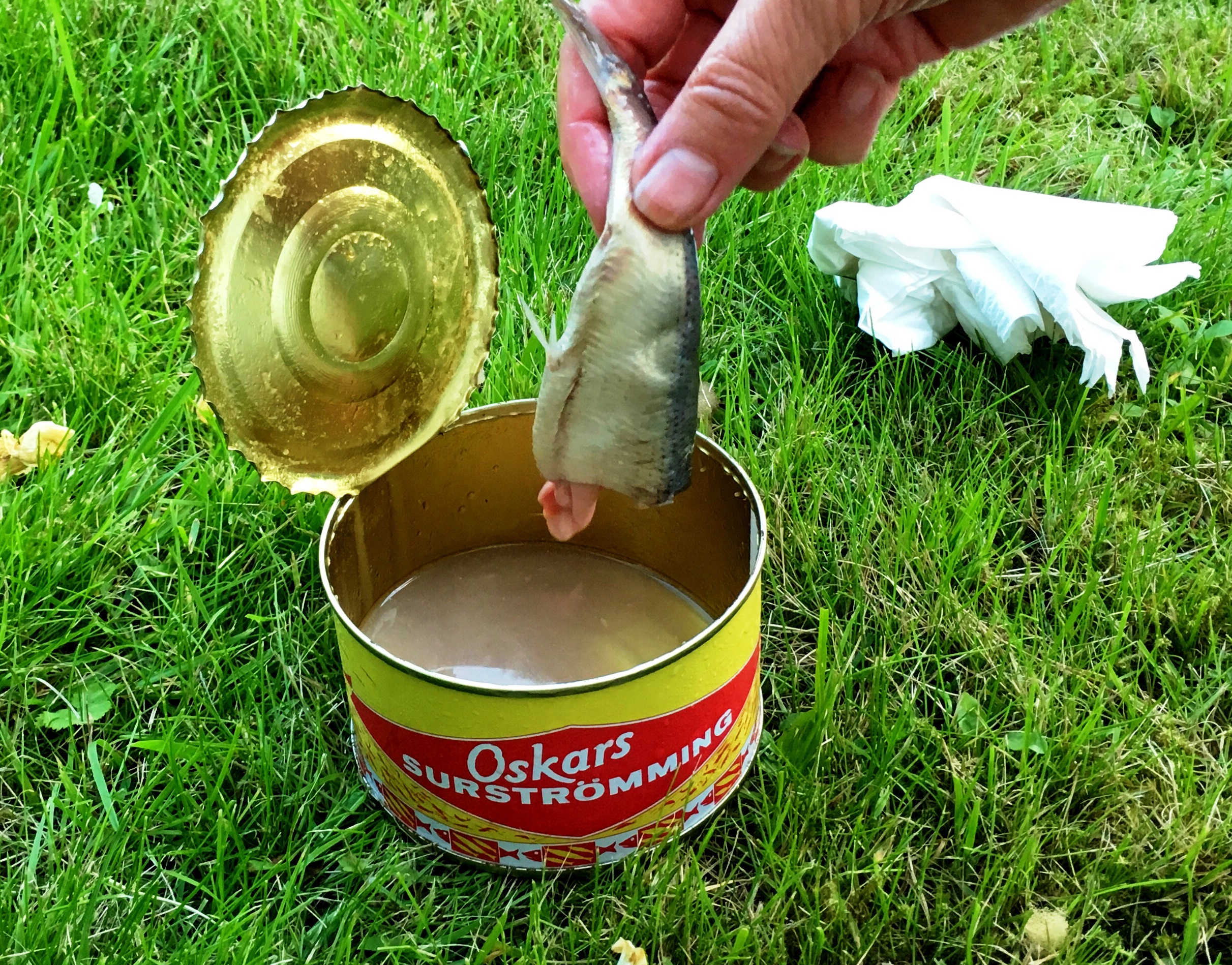
Freshly opened surströmming – strategically opened outside on the grass.

Surströmming – fermented herring

My adopted Swedish mother Ing-mari made me feel like her third child the moment I stepped through her door and had a suite of Northern Swedish delicacies lined up for me to try, starting with the extremely polarising surströmming. Now some say this fermented Baltic Sea herring is the smelliest food in the world but I know that isn’t true because that honour goes to Icelandic fermented shark which I can guarantee you will have you retching from 50m away.

the fidgety foodie_6 crazy (but delicious) things to eat in Sweden

Ing-mari shows me how it’s done

The Baltic herring used in surströmming is fermented for six months then stuffed in a tin to give the salty fish a sharp sour flavour. The smell is so pungent that there’s an unwritten law that a can must only be opened outdoors and far away from neighbours. When I arrived in Hemmanet outside of Sundsvall the said can was already ‘resting’ on the grass in preparation for our meal.

the fidgety foodie_6 crazy (but delicious) things to eat in Sweden

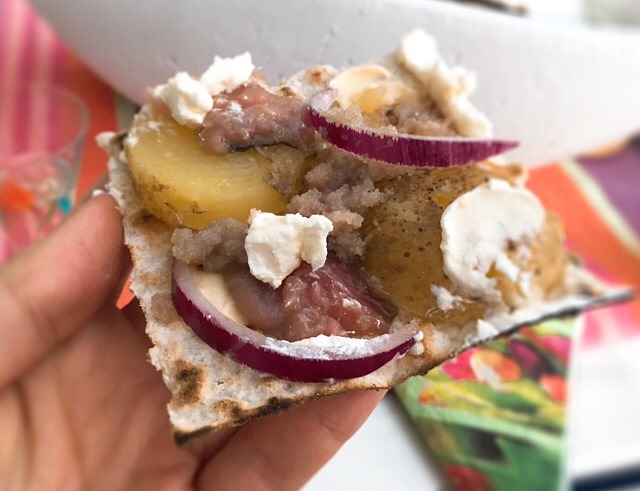
The combination of flavours and textures on this rye bread make the surströmming sing!

Ing-Mari served the surströmming on crisp rye bread with butter, slices of boiled potatoes, sliced red onion, caviar and sour cream. I found it delicious! And not just because it caved under the weight of the accoutrements – I tried some solo and really relished the tangy taste washed down with aquavit.

the fidgety foodie_6 crazy (but delicious) things to eat in Sweden

The curious creature that is the smörgåstårta

Smörgåstårta – sandwich cake

When I see something edible for the first time my eyes go wide, I get really excited and MUST TRY IT IMMEDIATELY. No one knows this better than my dear Swedish friend Joakim who has patiently indulged my foodie obsessions over many Swedish road trips.

It was on the latest that I spotted a strange construction in a supermarket. It was embellished like a cake but appeared to be made of savoury ingredients.

‘Oh yes’ said Joakim casually. ‘That’s a sandwich cake. They were very big in the 80s, my mum used to buy them’. Read More

9 more reasons to love cloudberries

the fidgety foodie_ 9 more reasons to love cloudberries(22)

Fresh cloudberries in the flesh

It’s been almost two years since I announced to the world that cloudberries are my crack. Since then my dependency has grown worse, exacerbated by a recent trip to the northern hemisphere where I had more access to the goods than I could handle. I’m literally on a cloudberry high as I write this.

I’ve waxed lyrical about these babies before. Their rarity. Their delicacy. Their sweet, sweet, but tart taste that has my eyes lolling in my head. My habit started with cloudberry jam in London and peaked with fresh berries in Helsinki. I’m too far gone to stop now.

But this year I took it to a whole new level. Cloudberry yoghurt? Yep. Cloudberries and fried cheese? All over it. Cloudberry soap? Absolutely (but only topically mind you – even I have limits). Cloudberries found their way into my world no less than nine times this July.

the fidgety foodie_ 9 more reasons to love cloudberries(15)

Delicious yoghurt flavoured with Swedish cloudberries

Cloudberry yoghurt

Clouberries are called hjortron in Sweden, pronounced ‘you-tron’. I don’t even have to hint to my Swedish friends anymore, they know how much I love them. On my first morning in the northern Swedish city of Sundsvall, I was greeted with a delicious breakfast spread by my adopted Swedish mother, Ing-Mari. Amongst the crisp rye bread and västerbotten cheese was a carton of hjortron fjäll – a thin rich yoghurt flavoured with my favourite berries. What a way to start the day!

the fidgety foodie_ 9 more reasons to love cloudberries(17)

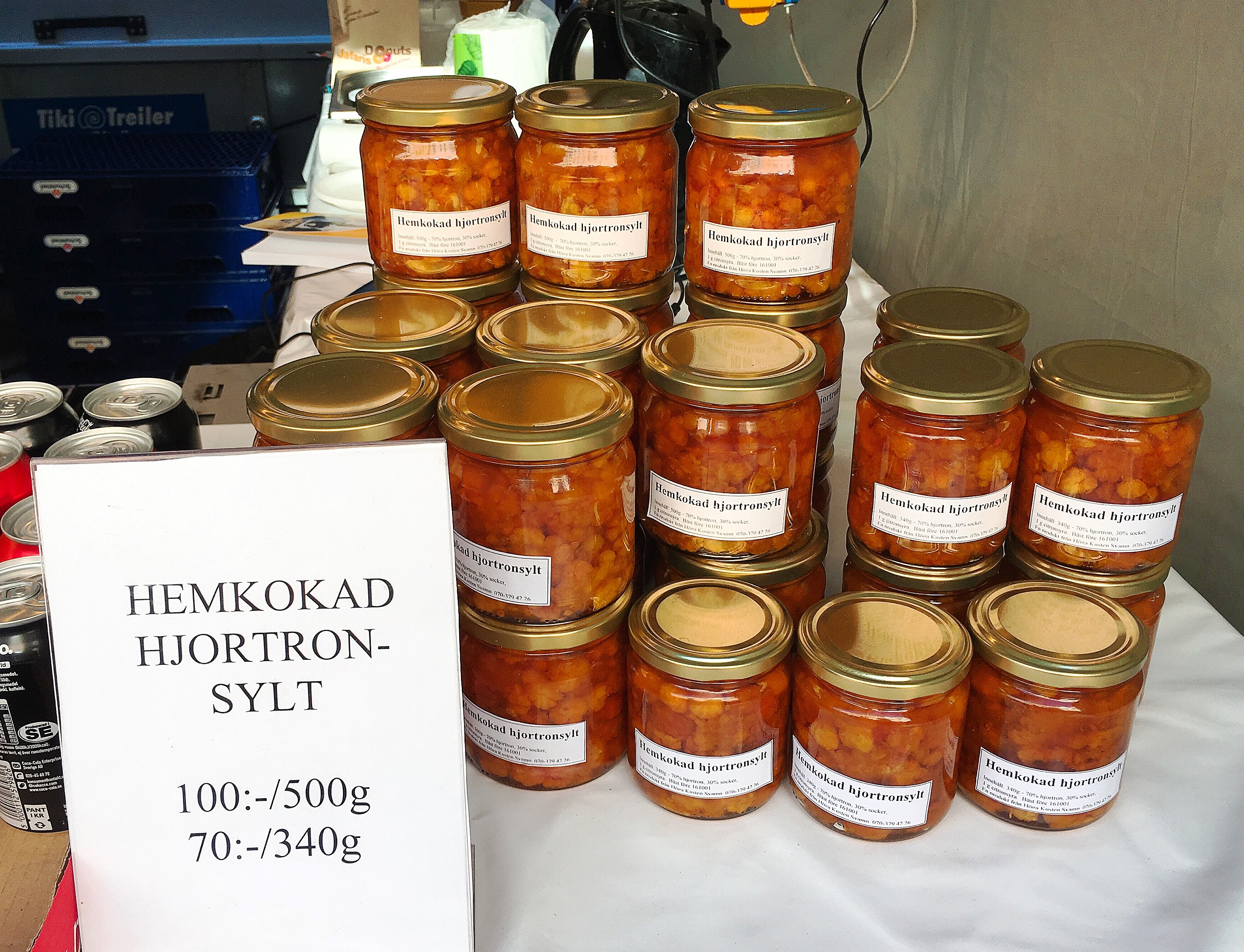
Cloudberry jam is where my addiction started

Cloudberry Jam

This is how is all began for me and is probably the most well known and well travelled cloudberry product. If you’re lucky you can even find it at IKEA (if you live in Sydney don’t even bother trying the Tempe store, I generally clean them out). It’s ubiquitous in Sweden and I had to start restricting my purchases as it’s not very practical to transport around the world.

the fidgety foodie_ 9 more reasons to love cloudberries(18)

the fidgety foodie_9 more reasons to love cloudberries

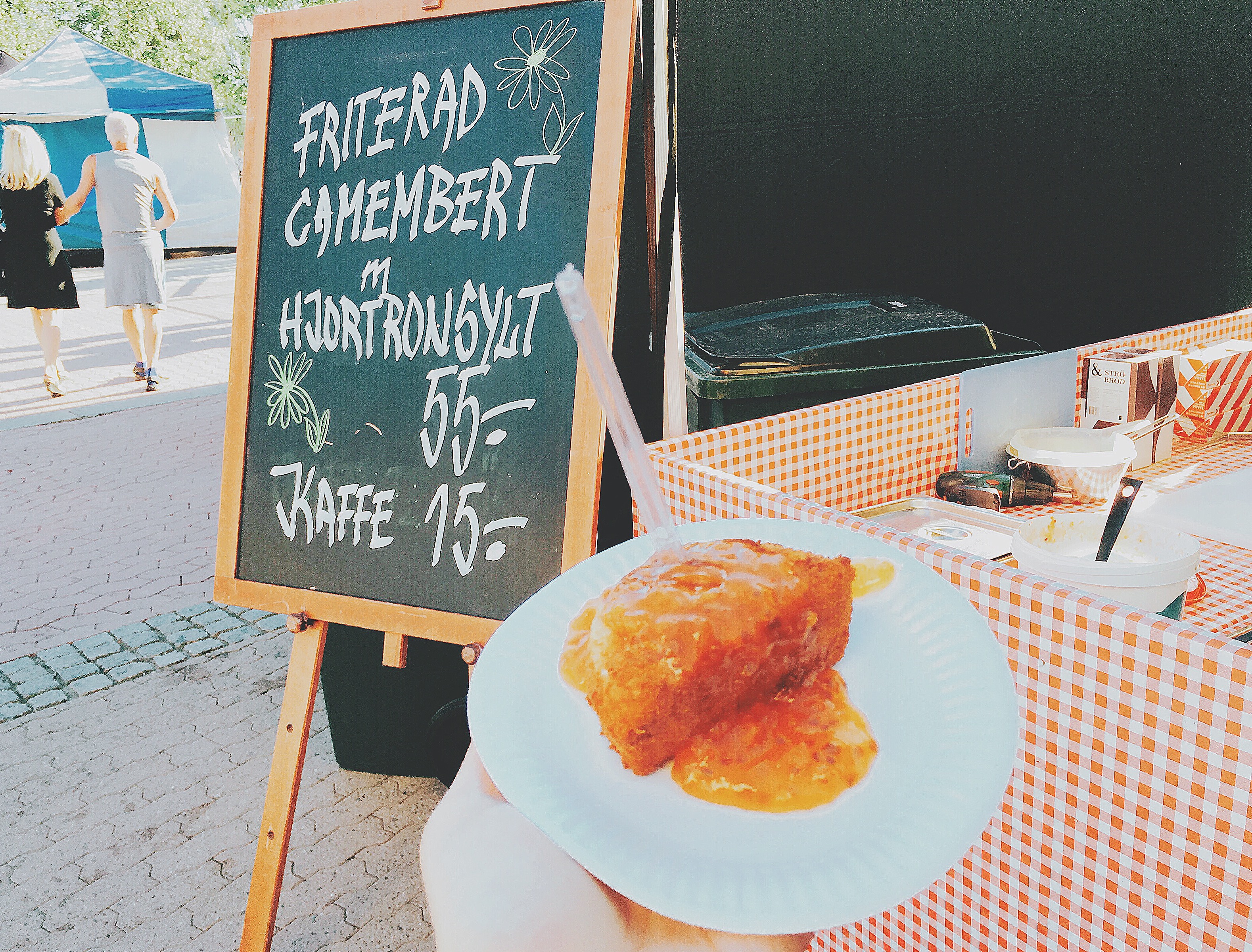
The unbelievably tasty combo of fried camembert and cloudberry jam

Cloudberry jam… with cheese!

Cheese and jam is a winning combination, nothing makes me go weak at the knees like a hunk of blue cheese stacked with quince jam. That was until the day I discovered fried camembert with cloudberry jam at a street market in Skelleftea, up in Swedish Lapland. The fried cheese had a crispy exterior, gooey cheesy interior, and worked delightfully with the heady sweetness of cloudberries.

the fidgety foodie_ 9 more reasons to love cloudberries(23)

Cloudberries are a cornerstone of Swedish dessert menus

Cloudberry dessert

It’s not uncommon to see cloudberry jam or sauce featured on Swedish dessert menus. The ante was upped, however, on a dining experience in Umeå, where I came across rullrån with mascarpone and cloudberries. Crispy cigar wafers were filled with mascarpone and served on a bed of macerated cloudberries and it was a sensational combination. Can’t wait to recreate this one at home. Read More

7 reasons why you need to know about Georgian food

the fidgety foodie_ 7 reasons why you need to know about Georgian food(19)

Georgian food stand at the Dorogomilovskiy market

How much do you know about Georgia?

The country nestled under Russia in the Caucasus that is, not the US state.

In all truth I previously knew only one thing about Georgia. In 2007 a little Georgian lass came fourth in Junior Eurovision (for under 15s), and on her return to Georgia she was welcomed like royalty. The Prime Minister even came to meet her at the airport, such was the enormity of this occasion.

Any country that treats its fourth place Eurovision winner like a god is solid in my book.

the fidgety foodie_ 7 reasons why you need to know about Georgian food

Pelamushi is a typical Georgian dessert

At this point I have to fess up and make it clear that I haven’t been to Georgia. BUT, I have just spent two weeks in Russia, in which Georgian food takes a starring role.

There seems to be a few reasons for the proliferation of Georgian cuisine. Firstly, it’s damn good. The benefit of sitting smack in the middle of the ancient East-West trade routes was being able to take your pick at the best of what was passing by, be it pillowy Turkish-style bread or Mediterranean salads. I’d argue that the cuisine is far more sophisticated than Russian food, which is hearty but more rudimentary in its approach to flavours.

the fidgety foodie_ 7 reasons why you need to know about Georgian food(22)

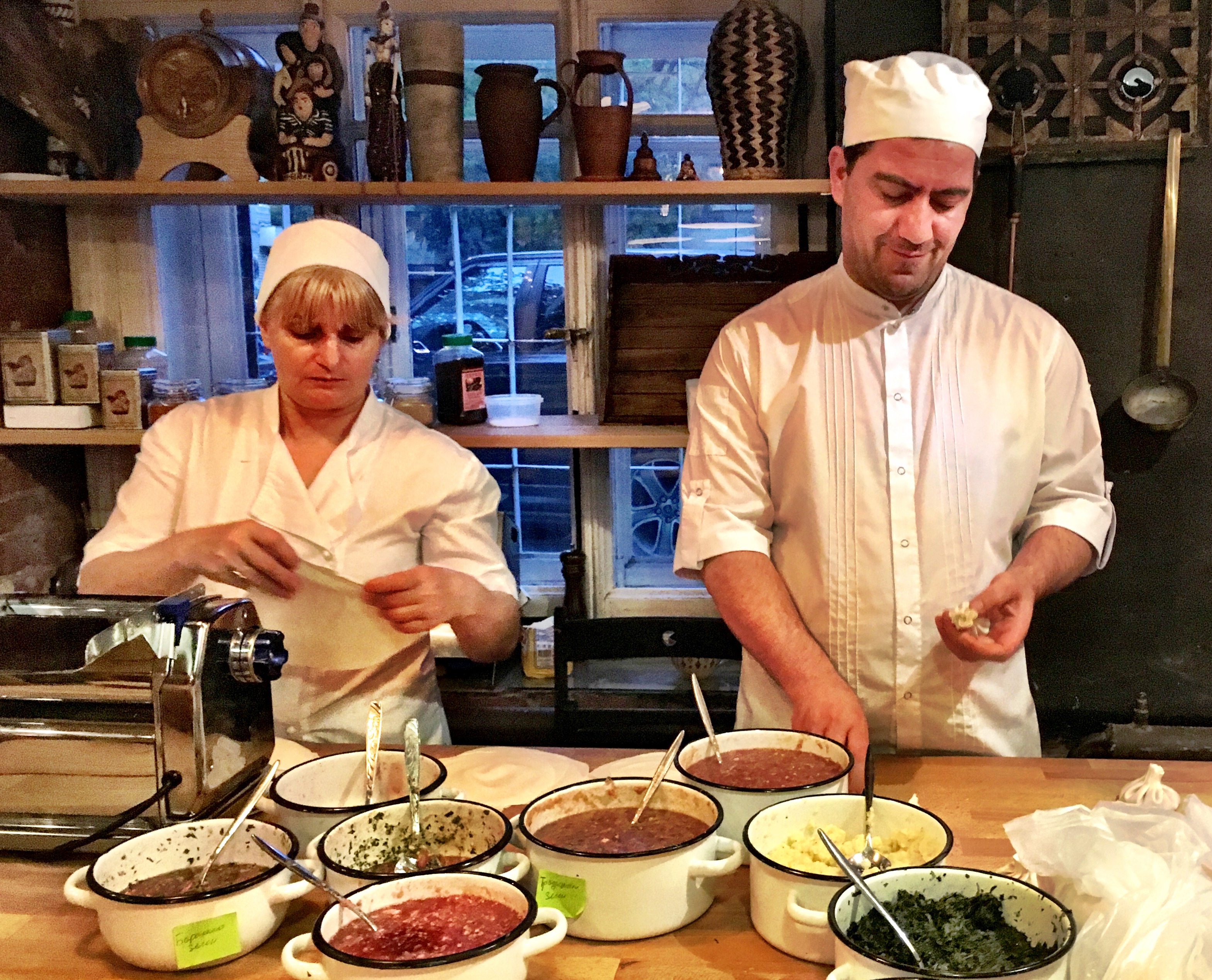
Making Georgian khinkali is serious business

There’s also the Stalin factor. His influence can still be felt across the country, despite the momentous changes since his death in 1953. Just visit the Moscow metro which he designed as an interconnected web of museums ‘for the people’, which features his face at every opportunity. Stalin was from Georgia, so this undoubtedly influenced this prevalence of Georgian restaurants throughout the 20th century.

the fidgety foodie_ 7 reasons why you need to know about Georgian food(13)

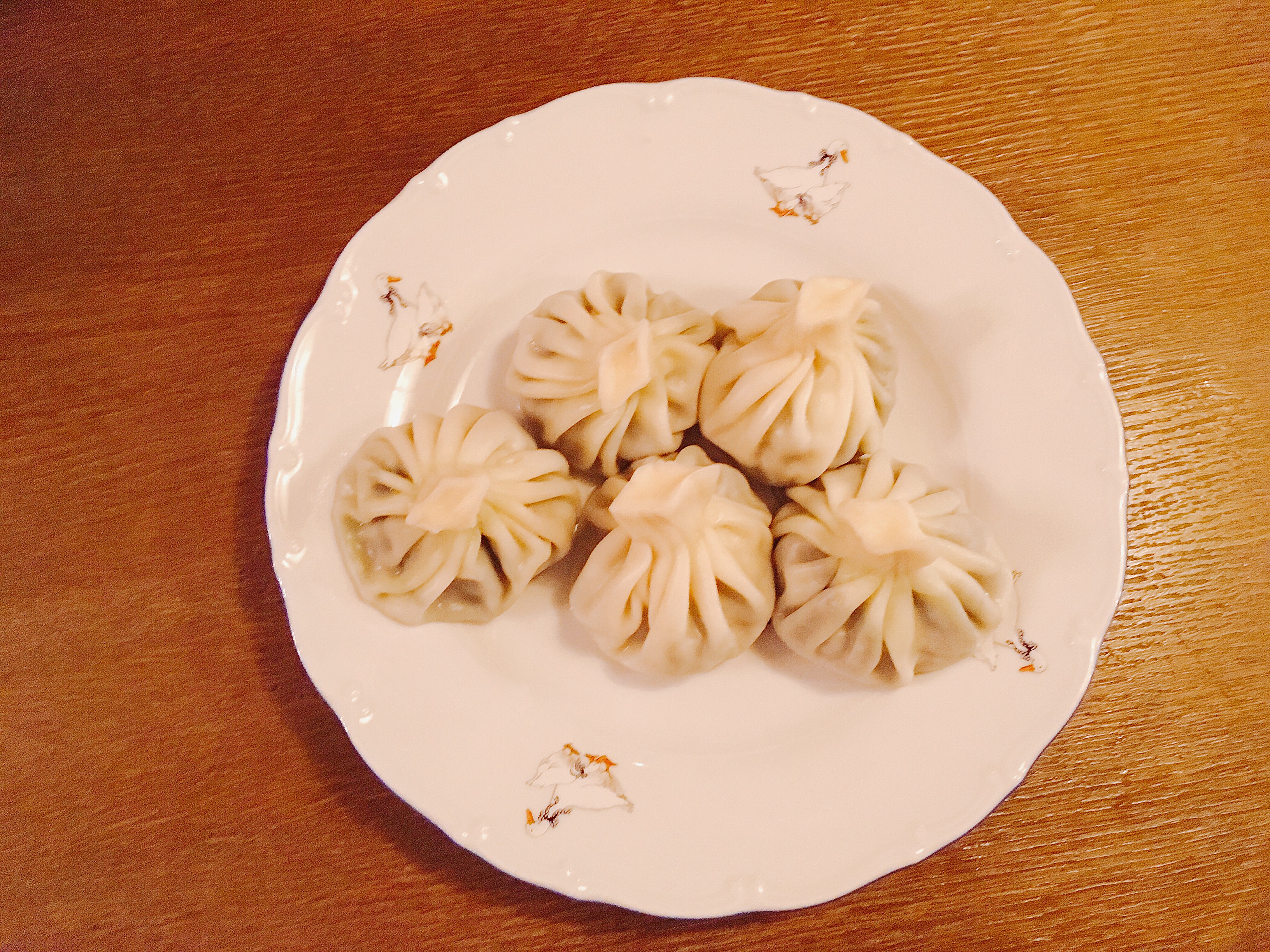
Perfectly folded Georgian soup dumplings known as khinkali

Therefore it’s not at all hard to find a Georgian restaurant in the main Russian cities and you’d be wise to seek one out at least once. I did just this on my first night in Moscow and subsequent nights in Saint Petersburg. It’s possible that I ate at more Georgian restaurants than Russian restaurants. Don’t tell Putin okay?

I narrowed down my favourite dishes to seven – and to be honest I didn’t even really go to town on some of the meat dishes the cuisine offers. And have I mentioned how much I liked the wine? There’s no question that I need a trip to the source to explore this delicious cuisine even further.

the fidgety foodie_ 7 reasons why you need to know about Georgian food(12)

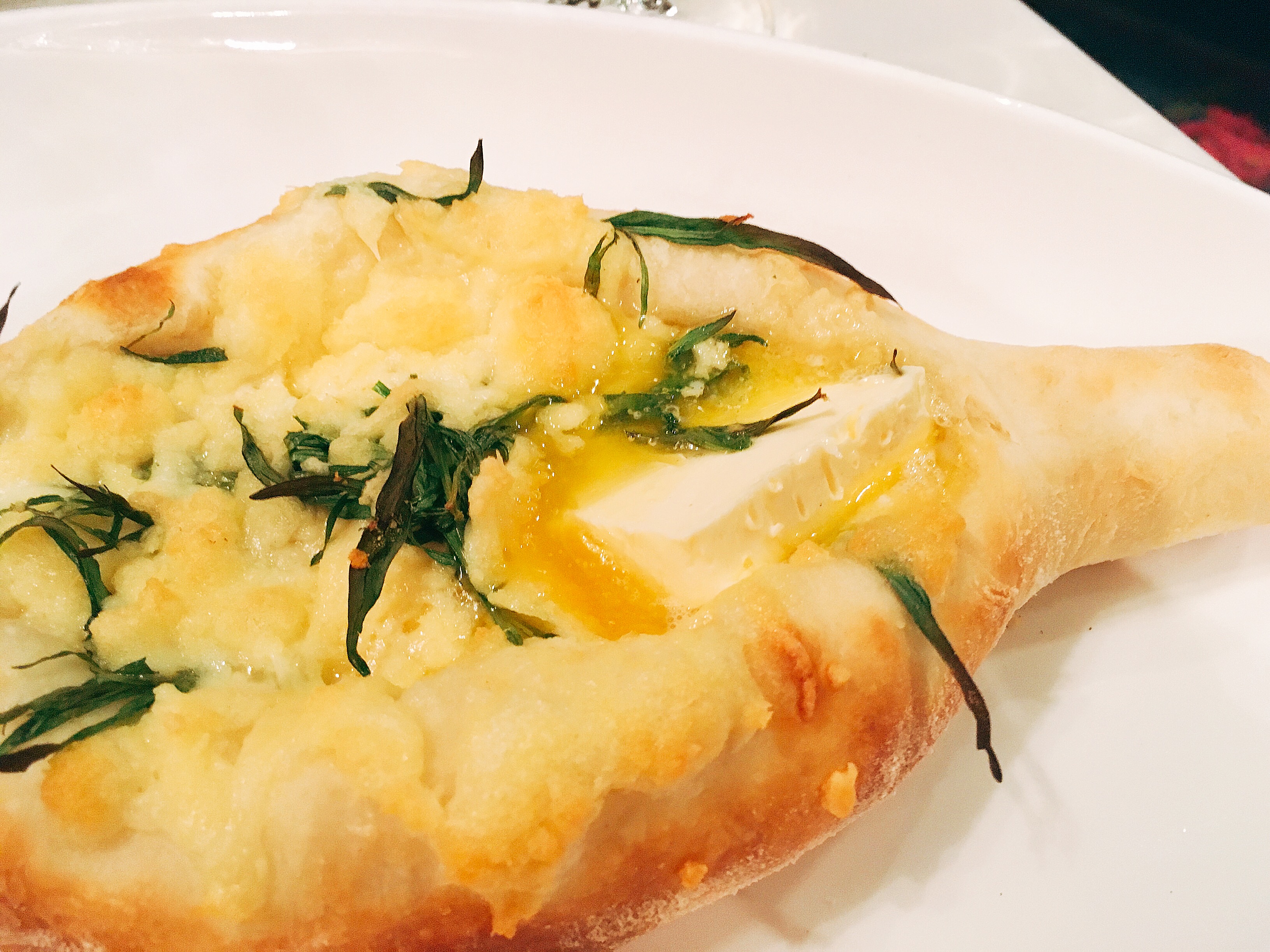
Khachapuri made with sulguni cheese and butter

Khachapuri

My first thought when this molten cacophony of bread and cheese was presented was its likeness to Turkish pide. This version was topped with the crumbly brined Georgian cheese called sulguni, along with chunks of another cheese.

the fidgety foodie_ 7 reasons why you need to know about Georgian food(11)

LOTS of butter

But wait a minute. I gulped and soon realised that the giant yellowy chunks weren’t cheese, they were butter. Meant for swirling through the cheese, just in case you weren’t already in the throes of a dairy overload. Butter, cheese and carbs – does it get any better? Read More

Marvellous Market #3: Great Market Hall, Budapest

Great Market Hall - Budapest

The Great Market Hall in Budapest

You know a city is serious about food when it builds a giant, purpose built market smack in the middle of the city (Sydney are you listening? Take note please).

Great Market Hall - Budapest

The market’s beautiful interior, looking down on the ground floor

That’s what the Hungarians did in the late 19th century when they built the Great Market Hall. Despite some knocks during the World Wars, a renovation has kept it looking sharp as one of the most beautiful buildings in the city.

Great Market Hall - Budapest

Rows of immaculately displayed local products adorn the food stalls

But it’s what’s inside that is really exciting. While the first floor features local handicrafts including traditional Magyar dress and collectables, the ground floor and basement are dedicated to food. Rows and rows of glistening fresh produce, endless stands of paprika and chilli and plenty of local delicacies are enjoyed by locals and tourists.

Great Market Hall - Budapest

Paprika and pepper in every possible form

The paprika stands are works of art – sachets, tubs and tubes of the stuff (spicy or sweet) are carefully arranged in colourful rows along with strings of dried peppers and garlic.

Great Market Hall - Budapest (5)

How can you not smile at the Smiley Shop?

Great Market Hall - Budapest (19)

Owls, ghosts, cats, mushrooms and other random pickle shapes

One thing Hungarians LOVE are pickles. Pickles and sauerkraut. They have their own dedicated area – ‘pickle alley’ in the basement floor. What I especially love is the creativity involved, with jars displaying cute messages and smiley faces made from the pickles, plus a massive array of sauerkraut-stuffed pickled vegetables.

Great Market Hall - Budapest

Sauerkraut is measured by the pitchfork

Read More